Mini Tractor vs Power Tiller: Which Suits Your Land?
Aglist Editorial · Published 21 Aug 2026 · Last updated 23 Sep 2026
One is for orchard rows and inter-cultivation, the other for wet paddy and hill terraces. Price, ground covered, operator comfort, subsidy and resale compared - plus who each machine is genuinely wrong for.
These two get compared because they cost roughly the same money. They should be compared on what they can physically do, because that is where they part ways completely.
What each machine actually is
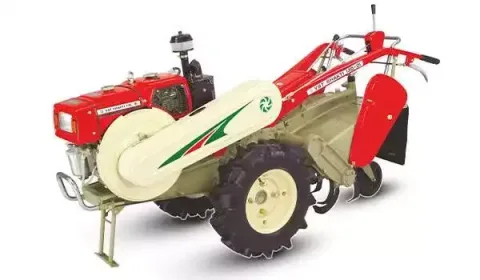
A power tiller is a walk-behind engine on two wheels with a rotary attachment. You walk behind it holding the handles, in the mud, for every acre you till. The VST Shakti 130 DI is India's reference nameplate: 13 HP, 405 kg, an 18-tyne rotor cutting 600 mm wide and 150 mm deep, hand-crank start.
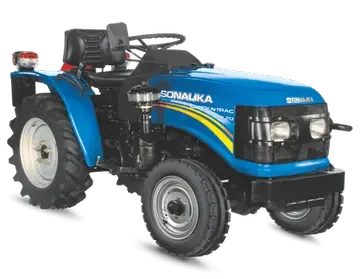
A mini tractor is a small tractor. You sit on it, it has a three-point linkage, a PTO, a lift and a gearbox with a reverse. The Sonalika GT 20 is 20 HP with a 650 kg lift, 540 and 540E PTO speeds and a 970 mm overall width.
That is the whole argument in two paragraphs. Everything below is detail.
Price, and the overlap that surprises people
Power tillers on our list
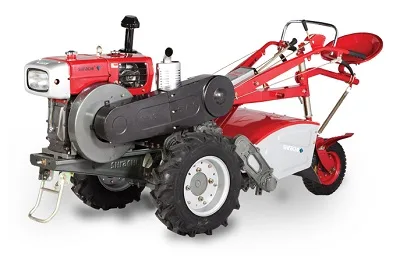
- Shrachi SF-15 DI — 15 HP, 480 kg, ₹1.65-1.85 lakh
- VST Shakti 130 DI — 13 HP, 405 kg, ₹1.80-2.045 lakh
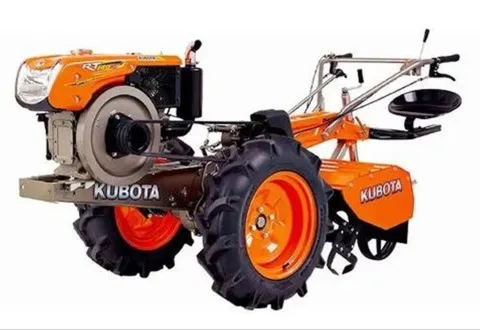
- Kubota PEM-140 DI — 13 HP, 346 kg, ₹2.20-2.75 lakh, with an 800 mm tilling width, the widest of the mainstream tillers
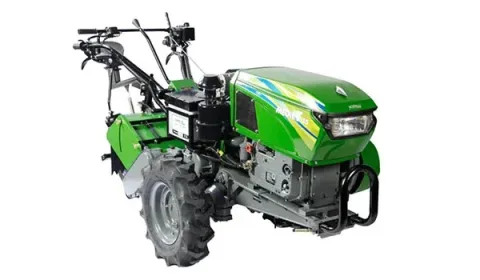
- KMW Mega T 15 — 15 HP, ₹2.85 lakh
Mini tractors on our list
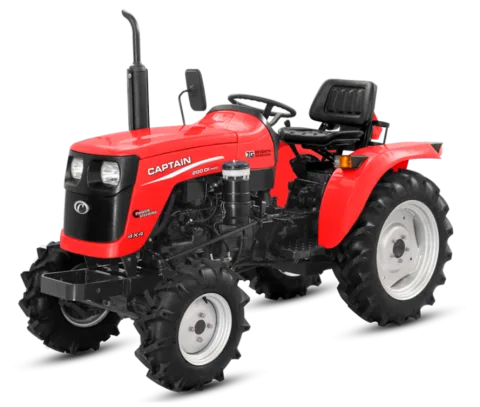
- Captain 200 DI — 20 HP, 17 PTO HP, 600 kg lift, ₹2.94-3.38 lakh
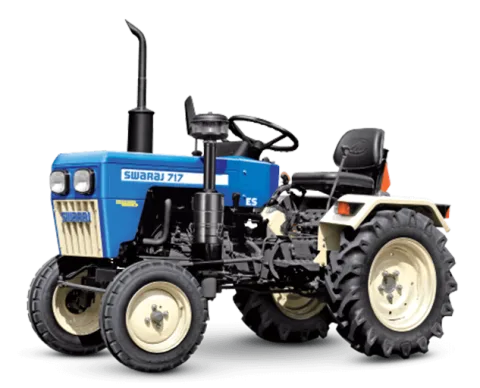
- Swaraj 717 — 15 HP, 9 PTO HP, 780 kg lift, ₹3.19-3.29 lakh
- Sonalika GT 20 — 20 HP, 650 kg lift, ₹3.21-3.55 lakh
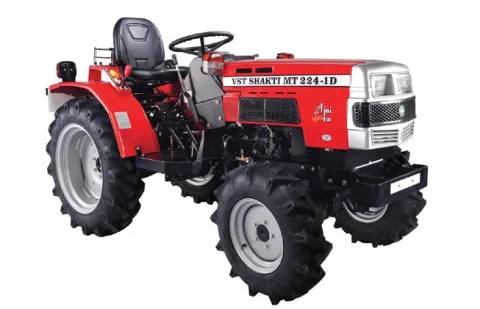
- VST MT 224 1D 4WD — 22 HP, 19 PTO HP, 920 mm overall width, ₹4.37-4.58 lakh
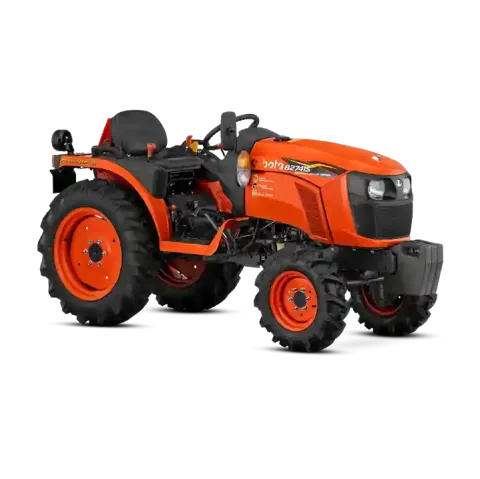
- Kubota NeoStar B2741S 4WD — 27 HP, ₹5.89-6.29 lakh
Look at the overlap. The KMW Mega T 15 at ₹2.85 lakh costs about the same as a Captain 200 DI, which gives you 20 HP, a seat, a 600 kg lift and a three-point linkage. If your land can take a mini tractor at all, paying tiller money for a premium tiller deserves a hard second look.
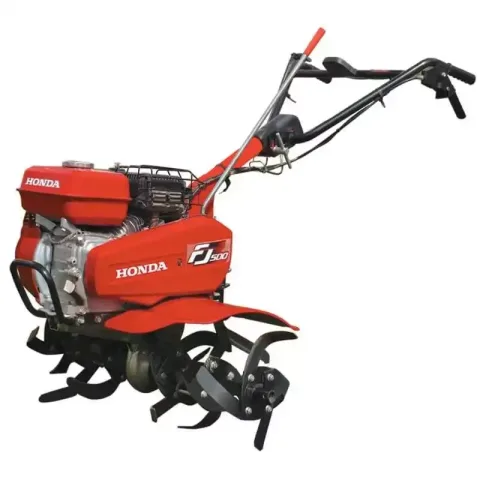
At the other end sits the Honda FJ500 at ₹74,000-94,000. It is a 4 HP petrol machine for kitchen gardens, polyhouse beds, tea and coffee estates. Do not put it in the same comparison as the diesel tillers; it is a different tool for a different job.
Remember too that the tractor prices are ex-showroom. Registration, road tax and insurance sit on top of them, and that stack varies by state.
Ground covered per hour
The Shrachi SF-15 DI publishes both halves of the sum, which is rare and useful: 0.4 to 0.5 acre per hour, on 1.2 to 1.5 litres of diesel per hour.
That is the honest ceiling for a 2 ft-wide walk-behind machine. Five acres of wet tillage is ten hours or more of walking behind it. A 20-25 HP mini tractor pulling a light rotavator covers considerably more ground per hour, because it is wider and faster. If the land allows a tractor, the tractor finishes the season sooner.
Where the power tiller genuinely wins
Wet puddled paddy. In a flooded field, a wheeled tractor is fighting to stay on top of the mud. Puddling does not need high draft, and heavy machines sink. The delta and coastal paddy belts run on tillers for exactly this reason.
Small, fragmented and terraced holdings. West Bengal has among the smallest average landholdings in India and is a power tiller market rather than a tractor market. On hill terraces and half-acre plots reached by a bund, a tiller can be walked in where a tractor cannot turn.
Very tight budgets. ₹1.65 lakh against ₹2.94 lakh is a real difference for a marginal farmer, and the tiller is a working machine at that price, not a toy.
Wet-field grip. The tiller's cage wheels bite in mud that would have a small 2WD tractor spinning.
Where the mini tractor genuinely wins
Orchards, vineyards and inter-cultivation. This is what these machines are built for. The VST MT 224 is only 920 mm wide overall, the Sonalika GT 20 is 970 mm, and the Mahindra JIVO 245 DI 4WD runs a 76.2 cm track width with a 2,300 mm turning radius. They go down grape, pomegranate, coconut and areca rows a full-size tractor cannot enter.
Anything on a PTO or a linkage. A lift and a three-point hitch open up a rotavator, a sprayer, a seed drill, a light trailer and a thresher. A tiller's attachment options are far narrower.
Haulage. A mini tractor with a small trailer can carry produce to the village or the mandi. A power tiller with a trailer is slow and uncomfortable, and it is not a road vehicle in any real sense.
Operator comfort, which is the point people underrate. You sit on a tractor. You walk behind a tiller, in mud, holding a machine that fights back in hard ground. Over a full season on five acres that difference is not a luxury argument, it is a health argument. The VST Shakti 130 DI is hand-crank start; several mini tractors offer a suspension seat.
4WD. The NeoStar B2741S, the JIVO 225 DI 4WD and the VST MT 224 are all 4WD, which matters on wet or sloping orchard ground.
Subsidy, briefly and accurately
Both categories are covered under SMAM, now delivered as the Agricultural Mechanization component of PM-RKVY. The percentages have been stable: 40% of cost for general farmers and 50% for SC/ST, small and marginal, women farmers and the North-Eastern states.
Ceilings apply and they differ by machine class — power tillers are split into below 8 BHP and 8 BHP and above, and small tractors have their own PTO-HP bands. Those rupee ceilings have been revised more than once, so check the current figures on agrimachinery.nic.in rather than trusting any number on a portal, including ours. Apply before you buy, from a registered dealer, and expect payment by DBT after physical verification.
Resale
We do not publish resale values, because no reliable public source tracks Indian second-hand prices by model and we are not going to invent one.
What can be said structurally: a mini tractor is a registered vehicle with a wider buyer pool and can be driven to a buyer, while a power tiller sells locally into a smaller market. Swaraj's own literature for the 724 XM claims low maintenance and strong resale, and that is the manufacturer's claim rather than a verified figure. Warranty length is the one hard number you can use as a proxy for how long the maker expects the machine to keep working: 5 years or 5,000 hours on the JIVO and the NeoStar, 2 years or 2,000 hours on the GT 20, 1 year or 700-750 hours on the Captain 200 DI and Swaraj 717.
Who each machine is wrong for
A power tiller is wrong for you if you farm more than two or three acres of dry-land field crops, you need to haul anything on a road, your rows are wide enough for a small tractor, or you cannot physically walk behind a machine for eight hours. Buying one because it was cheaper is how people end up hiring a tractor anyway.
A mini tractor is wrong for you if your fields are permanently wet paddy where wheels sink, your plots are terraced or reached only across a narrow bund, or your holding is under an acre or two scattered in pieces. It is also wrong if your real requirement is a full-size tractor — a 20 HP machine will not pull a 5 ft rotavator or a loaded trolley, and if you have field crops on five acres you should be reading best tractor for a 5 acre farm instead.
The short version
Wet paddy, terraces, tiny fragmented plots, tightest budget: power tiller. Orchards, vineyards, inter-cultivation, spraying, light haulage, anything needing a PTO: mini tractor. If both would work on your land, buy the mini tractor — it will do more, it will do it faster, and you will still be able to stand up at the end of the day.