Preet6.7/10
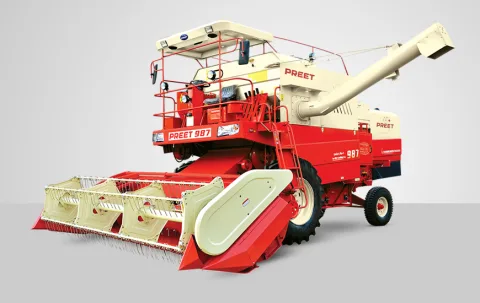
Preet 987
₹ 23.5 Lakh – ₹ 27.15 Lakh ex-showroom
A combine harvester is rarely a farm purchase in India. At ₹16.50 lakh to ₹34.51 lakh it is a business, and the people who own them mostly run them as one, moving with the harvest from Punjab and Haryana through MP and into Bihar as the wheat ripens. The machines listed here split into three types: big wheeled self-propelled combines with 12 to 15-foot cutter bars, track machines on rubber crawlers for wet paddy, and cheaper tractor-mounted units that use a tractor you already own. Cutter bar width and grain tank size are the two numbers that decide how many acres a day you cut, and acres per day is what pays the loan.
Showing 12 of 12
₹ 23.5 Lakh – ₹ 27.15 Lakh ex-showroom
₹ 23.95 Lakh ex-showroom
₹ 21.5 Lakh – ₹ 26.25 Lakh ex-showroom
₹ 18.7 Lakh ex-showroom
₹ 2.95 Lakh ex-showroom
₹ 23.5 Lakh – ₹ 34.5 Lakh ex-showroom
₹ 29.51 Lakh – ₹ 34.51 Lakh ex-showroom
₹ 29 Lakh – ₹ 29.5 Lakh ex-showroom
₹ 27.5 Lakh ex-showroom
₹ 16.5 Lakh ex-showroom
₹ 8.4 Lakh ex-showroom
₹ 27.21 Lakh – ₹ 27.76 Lakh ex-showroom
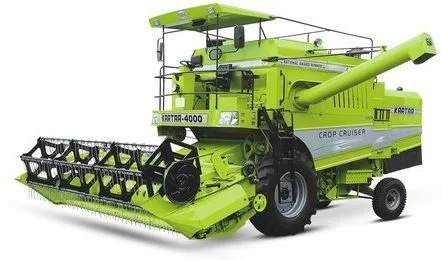
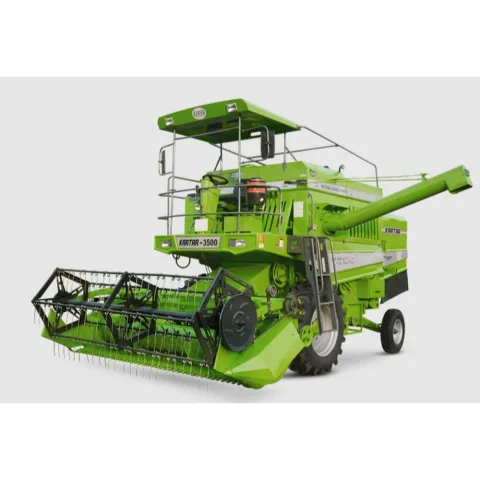
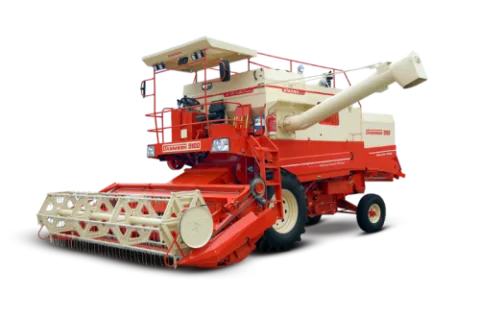
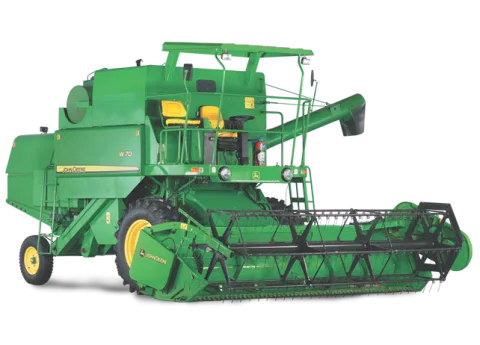
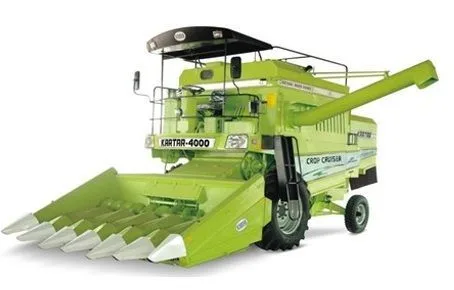
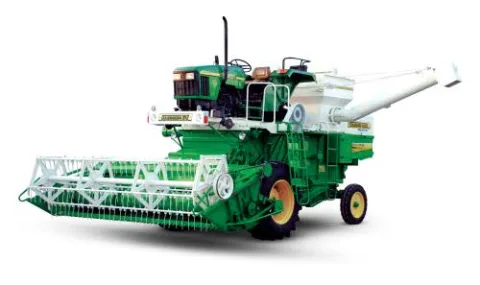
Almost nobody in India buys a combine to harvest only their own crop. The machine works for a few weeks a year, and the only way the arithmetic closes is by cutting for other people at a rate per acre. That is why cutter bar width dominates the buying decision. A 14-foot bar on a Kartar 4000, Preet 987, Dasmesh 9100 or John Deere W70 covers far more ground per hour than a 9.75-foot bar on a Kartar 3500, and over a two-week window that difference is the whole margin.
Grain tank size matters for the same reason. A 2700-litre tank means fewer stops to unload into a trailer; a 1200-litre tank on a track machine means more interruptions and more coordination with tractor drivers.
The other half of the economics is downtime. A combine that stops for three days in a two-week harvest window has lost more than a repair bill. Before you buy, find out where the nearest parts stockist is and whether the maker's mechanics travel during harvest season. This is where the Punjab makers — Kartar, Preet, Dasmesh — are strongest in the north and weakest elsewhere.
Wheeled combines are faster on firm ground, cheaper to buy at a given output and simpler to maintain. Track harvesters on rubber crawlers spread weight over a much larger contact area, which lets them work paddy fields with standing water where a wheeled machine sinks and has to be pulled out.
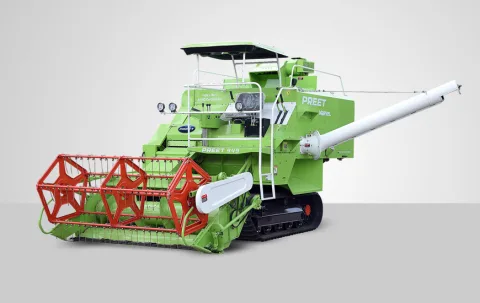
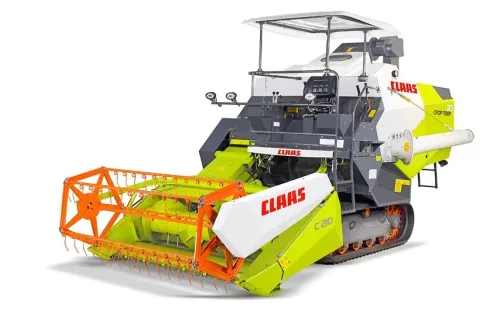
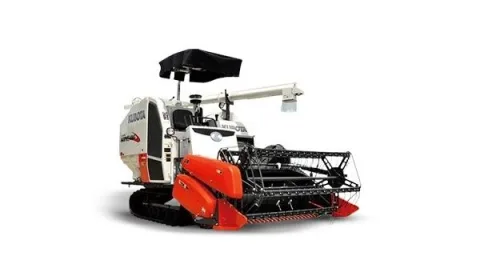
If you harvest in Punjab, Haryana or MP wheat, buy wheels. If you harvest paddy in the Godavari or Krishna deltas, Odisha, Bengal or coastal Tamil Nadu, tracks may be the only machine that works. The CLAAS Crop Tiger 30 Terra Trac at ₹16.50 lakh, Kubota HARVESKING at ₹27.21 lakh and Preet 949 TAF Track at ₹23.95 lakh are the track options here.
If you already own a 55 HP or larger tractor, a tractor-mounted combine like the Dasmesh 912 at ₹8.40 lakh with a 12-foot bar changes the maths completely. It costs roughly a third of a self-propelled machine because it borrows your tractor's engine and drivetrain. It also works your tractor hard and cuts more slowly. For a farmer with 30 to 60 acres who also does some hiring, it is often the sensible middle path.
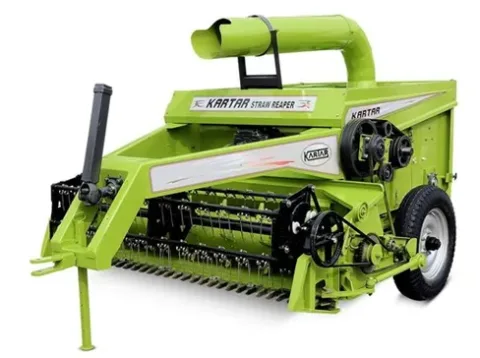
After a combine passes, the residue left behind is either a stubble-burning problem or a saleable product. A tractor-drawn straw reaper like the Kartar 56 at ₹2.95 lakh turns wheat stubble into bhusa for cattle fodder, and a baler does the same for loose straw. Factor that revenue in when you build the business case.
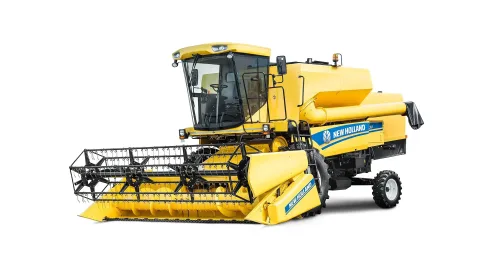
Self-propelled combines in our listings run from ₹16.50 lakh for the CLAAS Crop Tiger 30 Terra Trac to ₹34.51 lakh for the New Holland TC5.30. Tractor-mounted units are far cheaper: the Dasmesh 912 with a 12-foot bar is ₹8.40 lakh because it uses your existing tractor for power.
A track harvester on rubber crawlers. Options here are the CLAAS Crop Tiger 30 Terra Trac at ₹16.50 lakh, Preet 949 TAF Track at ₹23.95 lakh and Kubota HARVESKING DC-68G-HK at ₹27.21 lakh. Tracks spread the weight so the machine keeps cutting in standing water instead of sinking.
We cannot give you a verified acreage figure, since it depends on your local hiring rate, diesel cost, finance terms and how many days you can work. What we can say is that cutter bar width drives daily output, so a 14-foot machine reaches break-even in fewer seasons than a 9.75-foot one at similar cost.
No, but it costs a third as much. The Dasmesh 912 at ₹8.40 lakh gives you a 12-foot cutter bar without buying an engine, chassis and drivetrain. In return it works slowly, adds heavy wear to your tractor and ties that tractor up through harvest. For owner-harvesting rather than commercial hiring, it usually makes sense.