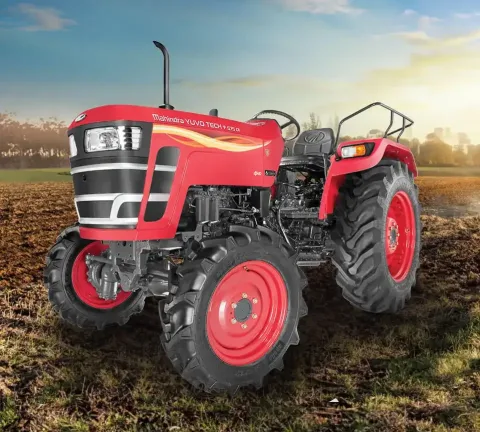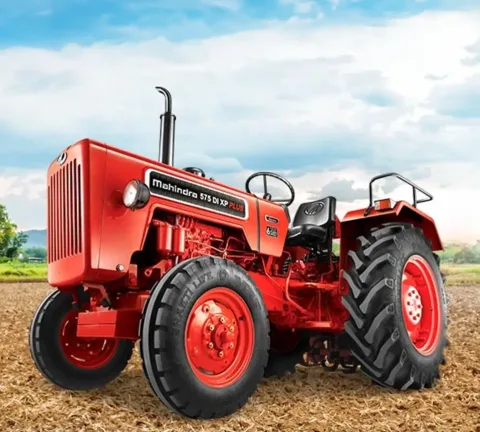
Mahindra8.1/10
Mahindra 575 DI
₹ 6.84 Lakh – ₹ 7.14 Lakh ex-showroom
The Aglist Score is built from six measures: value for money, power delivery, hydraulics, build, comfort and service reach. The full formula, the weights and the arithmetic are published here.
| Measure | Weight |
|---|---|
| Value for money Price per horsepower, measured against the median of the machine's own HP band — not against the whole catalogue. A 20 HP orchard tractor is never judged against a 60 HP row-crop machine. |
25% |
| Power & performance How much of the engine's power actually reaches the PTO, plus cubic capacity per horsepower — a usable proxy for torque reserve when the plough hits hard ground. |
20% |
| Hydraulics & implements Lifting capacity relative to engine HP. This is what decides whether a rotavator, a reversible plough or a loaded trolley is comfortable or borderline. |
15% |
| Build & durability Oil-immersed versus dry brakes, the transmission type, kerb weight per horsepower and cylinder count. Weight per HP matters in India because a light tractor loses traction in puddled fields. |
15% |
| Comfort & usability Power steering, forward gear count and drive type. Ten hours of puddling is a different job with power steering than without it. |
10% |
| Warranty & service reach Warranty length blended with how far the brand's dealer and spares network actually reaches into rural districts. A cheap tractor with no service point within 80 km is not cheap. |
15% |
Each measure is first normalised onto a 0–10 scale, then multiplied by the weight above and summed. The result is rounded to one decimal.
When a figure simply is not published — say a manufacturer does not state PTO horsepower — that measure's weight is redistributed across the ones we can compute. A machine with a thin spec sheet is not silently punished for it, and we do not fill the gap with a guess.
The value component compares against the median of the machine's own HP band, which means the score moves on its own as market prices move. It is not an opinion written once and left to go stale.
It is not an owner rating. Owner reviews are shown separately and never folded into the number, because the two answer different questions: one is what the machine offers on paper, the other is what three seasons of use felt like.
It is not a long-term reliability measure either. There is no trustworthy public failure-rate data for tractors in India, so we do not pretend to have one.
And it is not for sale. No manufacturer has ever paid for a score and none can.
₹ 6.84 Lakh – ₹ 7.14 Lakh ex-showroom
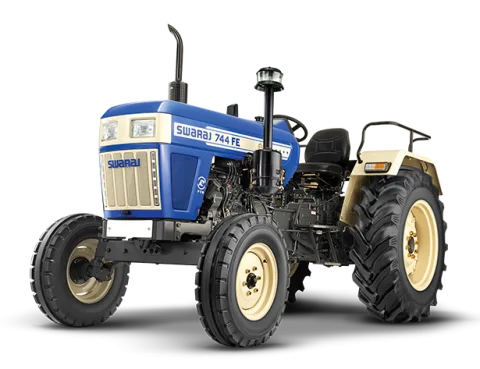
₹ 7.05 Lakh – ₹ 7.61 Lakh ex-showroom
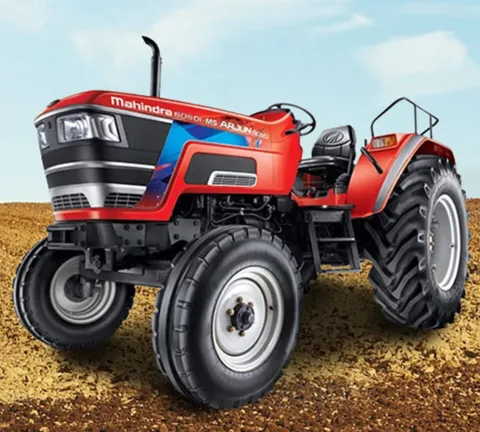
₹ 6.88 Lakh – ₹ 7.37 Lakh ex-showroom
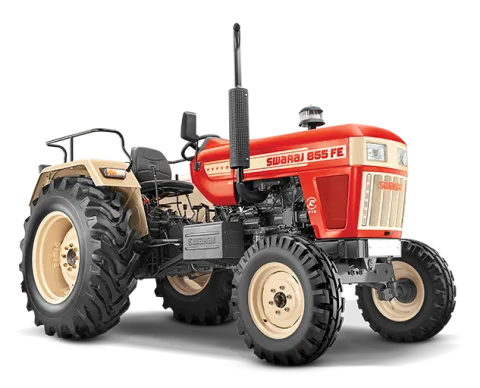
₹ 8.8 Lakh – ₹ 9 Lakh ex-showroom
₹ 7.87 Lakh – ₹ 8.37 Lakh ex-showroom
₹ 5.83 Lakh – ₹ 6.18 Lakh ex-showroom
₹ 9.67 Lakh – ₹ 10.36 Lakh ex-showroom
₹ 7.16 Lakh – ₹ 7.69 Lakh ex-showroom
₹ 10.08 Lakh – ₹ 10.7 Lakh ex-showroom
₹ 9.15 Lakh ex-showroom