Claas4.2/10
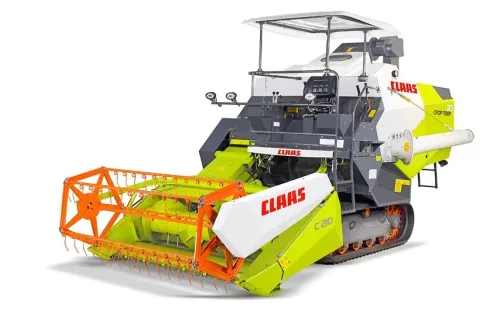
Claas CROP TIGER 30 TERRA TRAC
₹ 16.5 Lakh ex-showroom
CLAAS is a German harvesting specialist that began Indian operations in 1989 and runs its India business out of Chandigarh. In a market where most combines are built by Punjab engineering firms, CLAAS is the imported-engineering option.
We list one machine, and it is a distinctive one: the CROP TIGER 30 TERRA TRAC, a 60 HP four-cylinder track harvester with a 7-foot cutter bar and a 1200-litre grain tank, at ₹16.50 lakh. Terra Trac means rubber crawler tracks rather than wheels. In a paddy field with standing water or soft silt, tracks spread the machine's weight across a much larger contact area, so it keeps working where a wheeled combine sinks and has to be pulled out. For Andhra, Telangana, Odisha, West Bengal and the paddy districts of Tamil Nadu, that is the whole argument.
At ₹16.50 lakh it is also the cheapest self-propelled combine in our data, well below the ₹21 to ₹29 lakh wheeled machines from Kartar, Preet and John Deere.
The reasons for that price are the reasons to be careful. Sixty horsepower and a 7-foot bar mean modest daily output — this is not a machine that will cut 30 acres a day for a hiring business. Tracks also cost more to maintain than tyres, and CLAAS's Indian service network is small compared with the Punjab makers.
| Model | HP | Price | Aglist Score |
|---|---|---|---|
| Claas CROP TIGER 30 TERRA TRAC | 60 | ₹ 16.5 Lakh | 4.2/10 |
Ground pressure. Rubber crawler tracks spread the machine's weight over a much larger area, so a track harvester keeps cutting in wet paddy where a wheeled combine sinks. If your fields hold water at harvest, that is worth more than raw output. On dry, firm ground a wheeled machine is faster and cheaper to run.
₹16.50 lakh. That is the lowest price of any self-propelled combine in our listings, and it buys 60 HP from a four-cylinder engine, a 7-foot cutter bar and a 1200-litre grain tank on rubber tracks. Compare running costs, not just purchase price, since track maintenance is higher than tyres.
It is on the small side. A 7-foot cutter bar and 1200-litre tank mean more turns and more unloading stops than a 14-foot wheeled combine. For a farmer harvesting his own wet paddy land it is well matched. For a hiring business chasing acres per day, the bigger Kartar or Preet machines earn faster.