Best Tractor for Sugarcane Farming in India (2026 Guide)
Aglist Editorial · Published 8 Aug 2026 · Last updated 23 Sep 2026
Cane asks four different jobs from one tractor: deep tillage, planting, inter-row work in standing cane, and mill haulage. Here is how much HP each job really needs, and when 50-plus HP is a waste of money.
Cane sits on the ground for the better part of a year, and with ratoon it sits longer. That one fact changes what you should buy. A wheat farmer's tractor works in short violent bursts. A cane farmer's tractor does heavy tillage in one season, then crawls between rows for months, then spends the crushing season dragging loaded trolleys to the mill gate and idling in the queue. Three machines' worth of duty, and almost everyone buys one tractor to cover all of it.
Uttar Pradesh grows more cane than any other state, Maharashtra is second and Karnataka third. Western UP and the Kolhapur-Sangli-Ahmednagar cooperative belt both buy heavier than the national average, and haulage to the mill is the reason, not the field work.
The four jobs, and only one of them is horsepower-hungry
Deep tillage before planting. This is your ceiling requirement and it happens once per planting cycle. A two-bottom mould board plough is rated by its maker for 45-60 HP. A 7 ft offset disc harrow wants 60-70 HP. If you own those implements, they set your minimum, not your acreage.
Ridging and planting. A three-row cane cutter planter is a heavy hydraulics-and-PTO job. We do not carry a manufacturer HP rating for the three-row planter we list, so we will not put a number on it. Ask the planter's maker for its draft requirement before you match a tractor to it.
Inter-row work in standing cane. Weeding, earthing up and spraying between rows for months. This needs almost no power. What it needs is a machine that physically fits between your rows without shredding cane leaves and without the exhaust cooking the crop.
Haulage. Loaded trolleys, kutcha approach roads, then tarmac to the mill. This is not about engine HP at all. It is about weight on the rear axle, brakes that still work when hot, and a gearbox with a usable road ratio.
Horsepower: what the crop actually asks for
For most cane growers a 41-50 HP tractor covers the year. That band is where the Indian market has concentrated anyway, running at close to two-thirds of all sales by FY26 after steadily eating into the 31-40 HP band. Browse 41-50 HP tractors first and only move up if you can name the implement forcing you higher.
Going to 51-60 HP is defensible when three things are true together: you own the deep-tillage implements rather than hiring them, you haul your own cane rather than letting the mill's vehicles collect it, and your soil is heavy. Two out of three is not enough.
Ground clearance and row width: measure, do not assume
This is where most buying advice goes vague, so we will be blunt. We do not publish ground clearance figures for these tractors because we do not have sourced numbers for every model, and a wrong clearance figure is worse than none. Do this instead: take a measuring tape to the dealer yard. Measure the lowest point under the rear axle and under the drawbar. Measure your own row spacing and your ridge height at the tallest point of the season, not at planting. Then check that the rear tyres sit inside your row width at the widest track setting you would actually use.
A tractor that clears your ridges in December will not necessarily clear them in March. Buy for the worst week.
Haulage is where brakes and weight decide it
Loaded cane trolley, downhill, on a mill road with a queue at the bottom. That is the moment your brake choice gets tested. Insist on oil-immersed brakes for cane work. Dry disc brakes fade when they are hot and they suffer once dust and water get into them, which on a cane farm is every day.
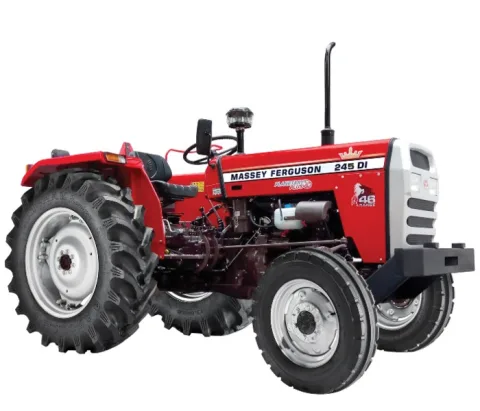
Worth knowing before you sign: the Massey Ferguson 245 DI uses sealed dry disc brakes rather than oil-immersed, and the Eicher 485 lists dry disc as standard with oil-immersed only as an option. Both are competent tractors. For trolley-heavy cane work, tick the oil-immersed box or look elsewhere.
Weight matters too. A light tractor with a loaded trolley behind it gets pushed around on a slope regardless of how much power the engine makes.
Which machines on this site fit cane work
If you haul your own cane over distance and own your tillage kit:
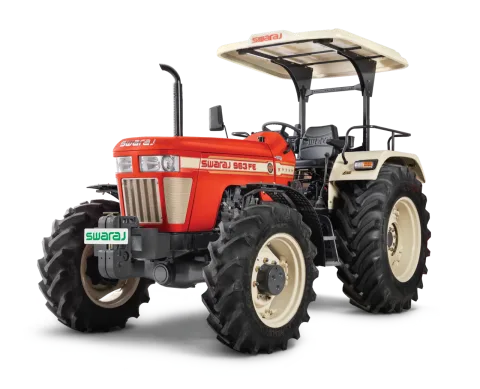
- Swaraj 963 FE — 60 HP, 53.6 PTO HP, 2,650 kg, 2,200 kg lift, 12F+2R synchromesh. The heaviest machine we list, and it behaves like it: excellent with a loaded trolley, clumsy on a short headland. Listed at Rs 9.66-10.36 lakh.
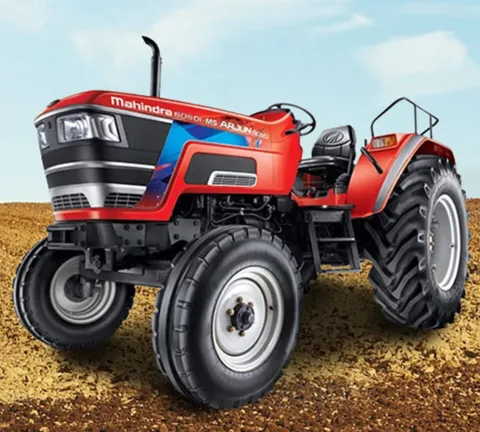
- Mahindra Arjun Novo 605 DI-i — 57 HP with 15 forward gears, which in practice means you get a crawl ratio for row work and a proper road ratio for the mill run out of the same box.
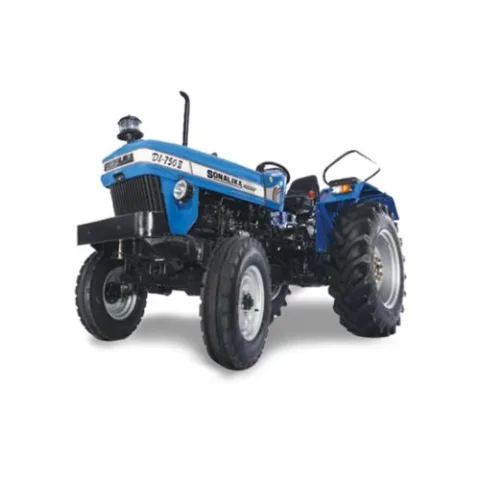
- Sonalika DI 750 III — 55 HP, 3707 cc spread over four cylinders, 2,200 kg lift, Rs 7.16-7.69 lakh. The cheapest honest route into 55 HP on this catalogue, and the four-cylinder engine lugs better at low revs than a triple of similar output.
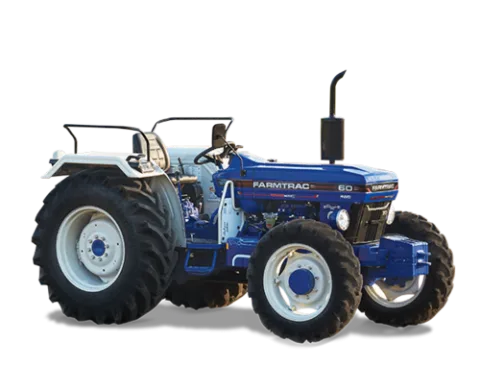
- Farmtrac 60 Powermaxx 4WD — 55 HP, four-wheel drive, 2,500 kg lift, the highest on our list. Rs 9.15 lakh, and you are paying a real premium for the front axle. Worth it on wet or sloping cane land, not on flat dry ground. Our 2WD vs 4WD guide works through when that premium comes back.
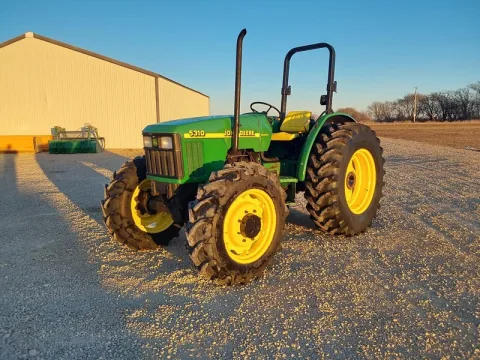
- John Deere 5310 — 55 HP, hydraulically actuated oil-immersed disc brakes, Rs 10.48-12.07 lakh. Note that the upper half of that range crosses Rs 10 lakh invoice value, which triggers 1% TCS at purchase.
If the mill collects and you hire deep tillage:
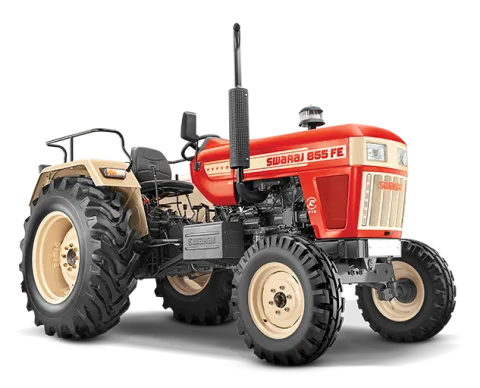
- Swaraj 855 FE — 49.3 HP, 2,220 kg, 2,000 kg lift. Heavy for its class, which is exactly what you want behind a trolley.
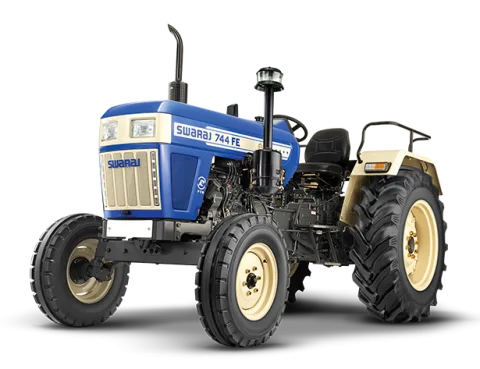
- Swaraj 744 FE — 50 HP at Rs 6.88-7.37 lakh, one of the better value entries in the band, though the base gearbox is sliding mesh and you will feel that shifting on a loaded gradient.
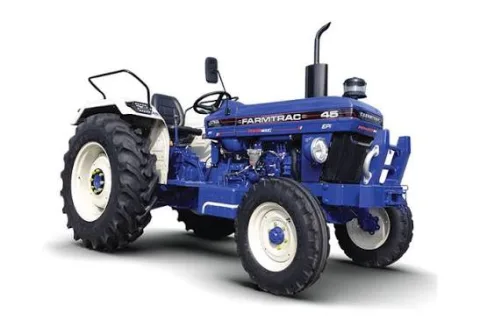
- Farmtrac 45 Powermaxx — 50 HP and 2,245 kg, unusually heavy for a 50 HP 2WD, which helps traction with a trolley.
For inter-row work in standing cane, a second small machine beats compromising your main tractor. The Mahindra JIVO 245 DI 4WD at 24 HP and Rs 5.33-5.48 lakh, or the smaller JIVO 225 DI, are built narrow for exactly this. See the full Mahindra range for variants.
The honest answer for a small cane holding
If you farm three to five acres of cane, the mill sends its own transport, and contract tillage is available in your block, then a 50-plus HP tractor is the wrong purchase. The gap between a Rs 6.9 lakh 45-50 HP machine and a Rs 9.7 lakh 60 HP machine is close to Rs 3 lakh. That is several years of hiring a deep plough and a planter, with no EMI, no extra insurance and no idle capital sitting in your yard for ten months of the year.
The case for buying big is a business case, not a farming one: if the bigger tractor earns custom hiring income from neighbours during crushing season, the sums change completely. Work that out on paper before the dealer works it out for you. Start with how much HP you actually need, then check what the machine costs to put on the road in your state under our registration and RTO charges guide, because the trolley is registered and taxed separately from the tractor in several states.