Tractor Registration and RTO Charges in India (2026)
Aglist Editorial · Published 12 Aug 2026 · Last updated 23 Sep 2026
What the on-road price of a tractor is actually made of, why agricultural registration matters more than any other line item, and which state figures we will not publish because we cannot verify them.
Ask a dealer for a price and you get the ex-showroom figure. Ask what you will actually pay and the conversation gets vague. This page sets out every line in a tractor's on-road price, says which are statutory and which are negotiable, and is honest about the places where the published record does not support a firm number.
What on-road price is made of
On-road price = ex-showroom price + statutory registration and tax + insurance + plate and handling charges. For a farm tractor the statutory part is unusually small compared with a car, because most states do not tax agricultural tractors at all.
Ex-showroom price is the manufacturer's price plus GST plus dealer margin. It is what OEMs publish and what our model pages carry.
GST is already inside it. Tractors moved from 12% to 5% GST on 22 September 2025 under the 56th GST Council recommendations, along with tractor parts and tyres, which fell from 18% to 5%. Several competitor sites add GST again on top of ex-showroom when calculating on-road price. That is simply wrong, and it inflates the figure by thousands.
RTO registration fee. Rule 81 of the Central Motor Vehicles Rules 1989 sets the fee table, and there is a detail worth knowing: there is no tractor line in it. The table runs from invalid carriage at Rs 50 through LMV non-transport at Rs 600 to heavy goods vehicles at Rs 1,500, plus Rs 200 extra where the registration certificate is a smart card. In practice agricultural tractors are registered under the LMV non-transport head at Rs 600 plus Rs 200, but this is administrative custom rather than a stated rule, so verify at your own RTO.
State automation or service fee. Some states add a fixed charge on top. Odisha's published table adds Rs 140, taking its LMV non-transport total to Rs 740.
State road tax. This is the biggest variable in any on-road quote, and for an agricultural tractor it is usually zero. More on that below.
HSRP. Mandatory, and normally fitted by the dealer on a new vehicle with the cost already inside the quote. Maharashtra is the one state that has published a tractor-specific plate price, fixing tractors and two-wheelers at Rs 531 inclusive of GST and snap-lock. General all-India guides quote Rs 400-1,100 across vehicle categories.
Insurance. Third-party cover is compulsory for every tractor under the Motor Vehicles Act 1988, and the agricultural road-tax exemption does not extend to it. Here we have to be careful. The notified third-party premium table names "Agricultural Tractors up to 6 HP" at Rs 910 and certain pedestrian-controlled machines at Rs 1,645, with a miscellaneous and special types category at Rs 7,267. Which slab a mainstream 40-50 HP farm tractor falls into is not unambiguous from public sources, so we will not publish a single TP figure. Ask your dealer for the exact premium in writing. Comprehensive cover, which your lender will almost certainly require, is quoted by trade sources at roughly Rs 4,000-7,500 a year. That is an estimate, not a regulated rate.
Hypothecation endorsement, if financed. Rule 81 fees run from roughly Rs 500 to Rs 3,000 by vehicle type while some state guides show Rs 100. There is no reliable tractor-specific figure.
Dealer handling and documentation. Trade guides put this at roughly Rs 5,000-15,000. It is not a government charge, you are under no legal obligation to pay it, and it is negotiable. If one line on your quotation deserves an argument, this is it.
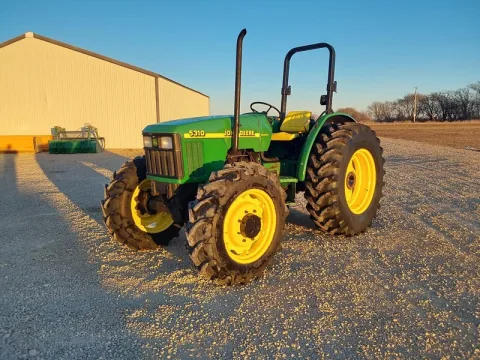
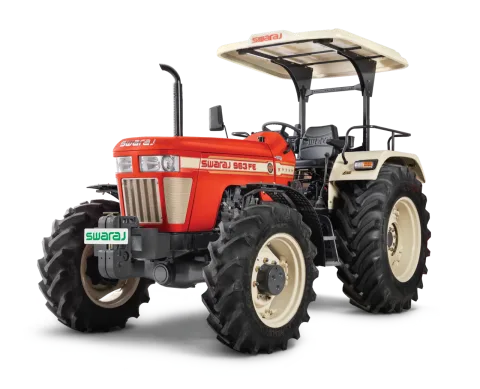
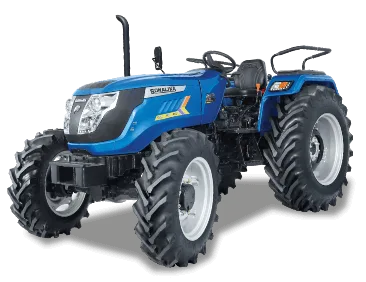
TCS. One per cent tax collected at source applies where invoice value exceeds Rs 10 lakh. Most farm tractors stay under that, but the John Deere 5310 at Rs 10.48-12.07 lakh, the Swaraj 963 FE at up to Rs 10.36 lakh and the Sonalika Tiger DI 55 CRDS at up to Rs 10.70 lakh can cross it. TCS is creditable against your income tax; it is not a sunk cost.
Agricultural versus commercial registration
This is decided at registration, it turns on declared use evidenced by land records, and it changes the tax bill more than anything else on the list.
Agricultural registration is exempt from road tax in most states. You will need Form 20 (application), Form 21 (sale certificate), Form 22 (roadworthiness) and proof of landholding such as a 7/12 utara, khasra or khatauni. Permitted use is your own farm produce and inputs. Note that the commonly repeated details about plate colour and licence class come from private guide sites rather than an official source, so treat them as guidance and confirm at the RTO.
Commercial registration attracts tax, sometimes heavily. Karnataka's 2026 amendment bill inserts a "Commercial Tractors Trailers" head at 10% of vehicle cost on new registration. Bihar charges one-time tax at 1% of cost for tractors used otherwise than for agriculture. Rajasthan charges 1% of tractor cost for non-agricultural tractor-trailers used as goods vehicles. Gujarat charges Rs 3,000 plus Rs 1,000 for every additional 1,000 kg above 2,000 kg.
The trap most pages ignore. Several statutes narrow what "solely for agriculture" means. Maharashtra's Explanation 1 to section 13 defines agricultural operation as tilling, sowing, harvesting, crushing and transit to and from farms, and expressly excludes transporting produce. Bihar and Jharkhand say the same. Tamil Nadu is the opposite: its exemption is understood to cover hauling produce to markets, mills and storage. If your tractor's main off-season job is carting produce, the state you are in genuinely matters.
The state picture
Punjab, Haryana, Madhya Pradesh, Tamil Nadu, Maharashtra and Gujarat all have clear statutory exemptions for agricultural tractors, though the drafting differs. Haryana's is the best written of the set, naming tractors, trailers, harvesters and power tillers explicitly. Maharashtra's exempts the tractor but expressly not the trailer.
Uttar Pradesh has no blanket exemption section; it is built into the charging entries, so no meaningful tax is charged on an agricultural tractor, but the legal footing is weaker and RTO practice can vary by district. Rajasthan's position is inferred from the absence of a charging entry rather than an exemption clause. West Bengal excludes agricultural tractors from the very definition of "tractor", which is the strongest form there is, but we could not retrieve the current schedule of the 1989 additional tax act, so we will not publish a rupee figure.
Andhra Pradesh and Telangana share the same 1963 Act, and their exemption is the narrowest of the set: registration in the name of the landowner or occupier, personal cultivation, and use within fifteen miles of the land. Use it otherwise and the Act provides a nominal Rs 25 per quarter.
Odisha is the clear exception. It levies one-time tax at 3% of vehicle cost on tractors and trailers up to 9,500 kg laden. That is real money, and it makes Odisha's on-road cost meaningfully higher than neighbouring states. One consumer site claims agricultural vehicles pay no tax in Odisha; the statutory position and the state's own arrears settlement table for tractors say otherwise.
Karnataka is different again, and here we have to stop short. It does not exempt agricultural tractors; it gives them a concessional age-banded lifetime tax under Part A2 of the Schedule, running from 93% of the base tax for a vehicle under two years old down to 25% above fifteen years. We could not recover the base figure those percentages apply to from any public source. So we will not publish a Karnataka rupee figure or an add-on percentage. Ask your RTO.
Chhattisgarh applies the Motoryan Karadhan framework inherited from Madhya Pradesh, under which vehicles used solely for agriculture are not taxed. We could not retrieve the current Chhattisgarh Act text directly, so treat this as provisional and confirm locally.
Trailers are taxed separately in several states, which most tractor sites omit entirely. Madhya Pradesh charges Rs 28 per quarter up to 1,000 kg unladen and Rs 66 above; Tamil Nadu Rs 340 up to 3,000 kg laden and Rs 400 for 3,000-5,500 kg; Odisha Rs 120, Rs 450 or Rs 900 by laden weight. Bihar allows a combined tractor-and-trailer one-time tax of Rs 3,000 where the tractor is up to 25 HP and Rs 5,000 above it, so almost every mainstream tractor sold today falls in the Rs 5,000 slab.
What this adds up to
For a tractor registered for agriculture in an exempting state, budget roughly 2-5% of ex-showroom for the whole add-on stack: registration around Rs 800, HSRP a few hundred, insurance from Rs 4,000 to Rs 18,000 depending on cover, and dealer handling if you agree to pay it. On a Rs 7 lakh tractor that is broadly Rs 10,000-35,000. In Odisha add the 3% one-time tax. These are modelled estimates built from the components above, not quoted figures, and Karnataka is deliberately absent from them.
Two current items to watch, neither of which we will state as settled. A Supreme Court order of 5 August 2026 extended mandatory third-party cover at purchase for new cars and two-wheelers; the reporting does not mention tractors, so do not assume it applies. And a draft MoRTH notification proposing GPS tracking and event data recorders on tractors was still not confirmed as finalised as of August 2026.
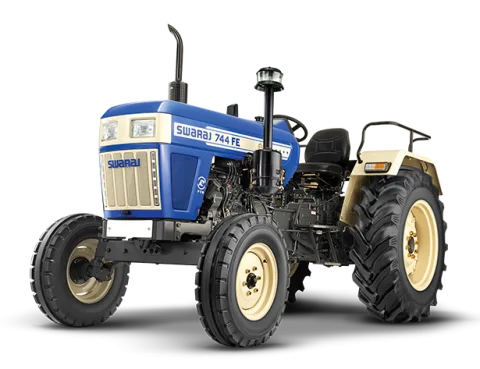
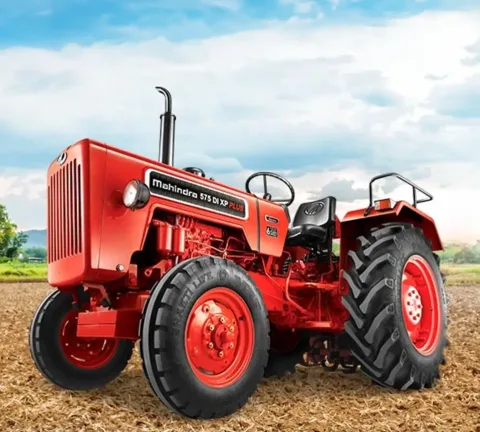
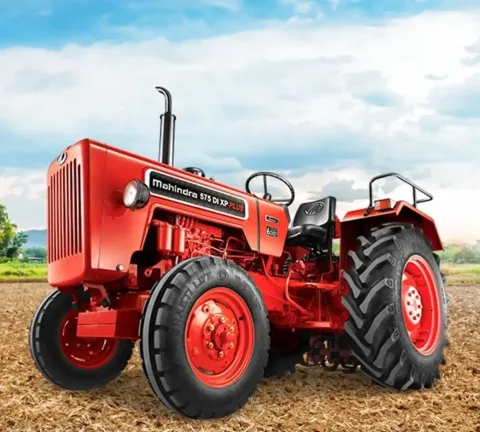
Next, work out what the machine costs to run rather than to buy: our tractor loan and EMI guide covers borrowing, our subsidy guide covers what you can claim back, and if the specification is still open, start with how much HP you need. Mainstream 41-50 HP buys like the Swaraj 744 FE and Mahindra 575 DI sit below the TCS threshold; the 51-60 HP band often does not.