Best Tractor for Paddy and Puddling in India (2026)
Aglist Editorial · Published 9 Aug 2026 · Last updated 23 Sep 2026
In a flooded field, horsepower stops being the answer. Weight per HP, cage wheels, oil-immersed brakes and a low crawl gear decide whether you puddle the plot or just dig a hole in it.
Puddling is the one operation where a tractor spec sheet lies to you. On dry land, more horsepower means more work done. In six inches of standing water over softened clay, a powerful tractor with the wrong setup just spins its rear wheels, throws mud over the bonnet and sinks. The man on the 32 HP machine next door finishes his plot and goes home.
West Bengal grows more paddy than any other state, and it is a power tiller market rather than a tractor market. Odisha, Tamil Nadu's Cauvery delta and the Krishna-Godavari belt of Andhra Pradesh are the same picture: small plots, wet fields, and a strong custom-hiring culture. Punjab is the outlier, running paddy on big consolidated holdings with 50-plus HP machines. Where you farm changes the answer more than what you grow.
Why a light tractor spins
Traction in a puddled field comes from weight pressing lugs into the soil, not from engine output. Once wheel slip starts, adding throttle makes it worse. So the question is not how many HP the tractor has, it is how many kilograms it puts on the driven wheels for each of those HP.
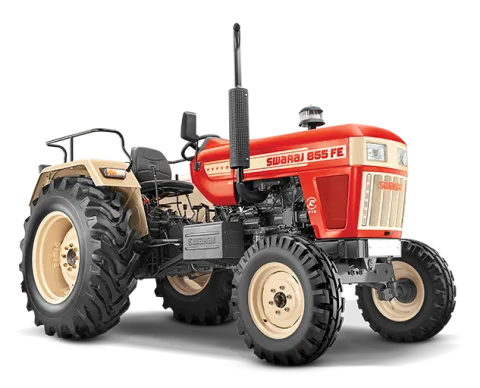
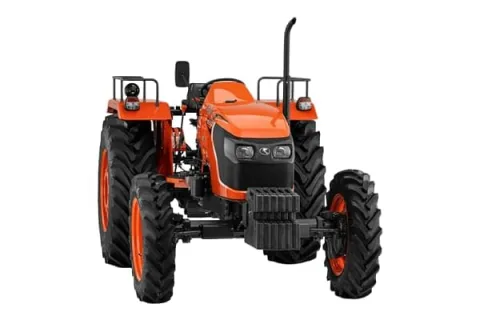
Compare two machines on this site. The Swaraj 855 FE is 49.3 HP at 2,220 kg, roughly 45 kg per HP. The Kubota MU4501 2WD is 45 HP at 1,850 kg, about 41 kg per HP. The Swaraj has more mass sitting on the rear axle to convert its power into pull; the Kubota is the lighter, quicker-turning machine that will do less damage to a soft plot. Neither number is right or wrong. It tells you which one will need ballast and which one will need care.
There is a limit to this logic. Weight helps grip but a heavy machine also sinks deeper, works the plough pan harder, and needs more power just to move itself through the slurry. That is why the practical fix in paddy is not a heavier tractor. It is cage wheels.
Cage wheels do the job that horsepower cannot
Cage wheels bolt outside the rear tyres and give the tractor a much larger contact area in slurry, so it floats instead of digging in and grips instead of polishing the mud. Almost every serious paddy operator in the delta districts runs them. If you buy a tractor for puddling and do not budget for cage wheels, you have bought half the machine.
Ask your dealer specifically whether the model's rear axle and hub pattern take a standard cage wheel set, and what it costs. It is not a universal fit.
The brakes question, and it matters more than people think
Puddled fields are the harshest environment there is for a brake. Water, silt and fine clay find their way into anything not sealed properly, and dry disc brakes lose bite once that happens. For paddy work, oil-immersed brakes are not a luxury item.
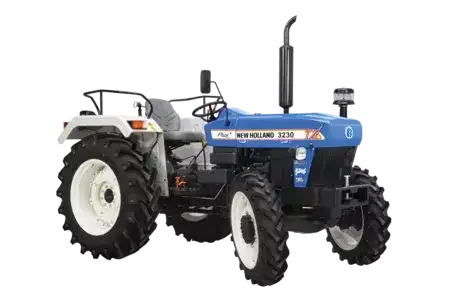
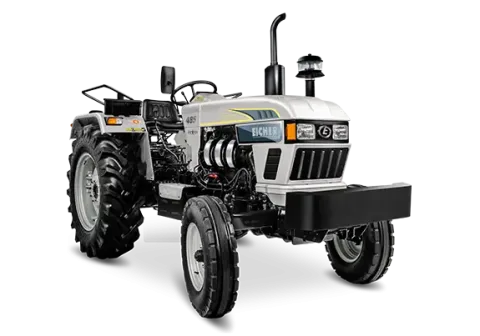
This rules a few machines in and out. The Massey Ferguson 245 DI runs sealed dry disc brakes. The Eicher 485 and Eicher 380 list dry disc as standard with oil-immersed as an option, and the Preet 4549 is the same story. On a wheat farm this is a minor point. On a paddy farm, pay for the wet brake option or choose a model that has it as standard, like the New Holland 3230 TX Super with its oil-immersed multi-disc setup.
Gearing: you need a genuinely slow gear
Puddling with a rotary puddler or a cage-wheel-and-plank setup is done slowly, at PTO speed, with the engine holding revs. A gearbox with only eight forward speeds spread wide often has nothing usable between "too slow to keep PTO revs up" and "too fast for the puddler".
Look at gear counts and how they are laid out:
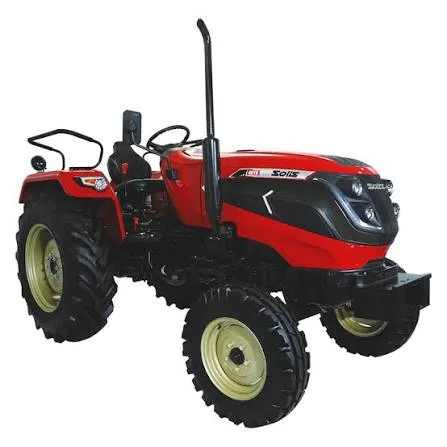
- Solis 5015 E — 10 forward and 5 reverse, fully synchromesh, 50 HP with 45.8 PTO HP. Reverse count matters when you are shuttling in a small bunded plot.
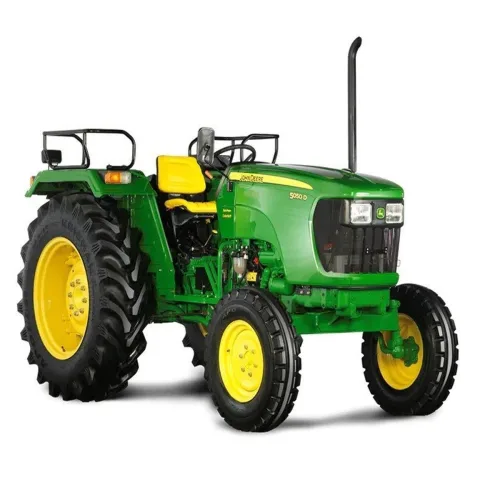
- John Deere 5050 D — 8F+4R or 12F+4R collarshift, 50 HP.
- New Holland 3230 TX Super — available as 8F+8R, an unusual layout that gives you a matched reverse for every forward speed.
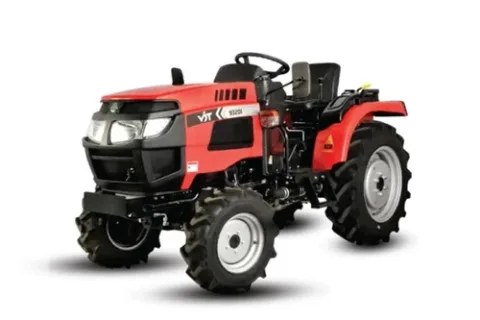
- VST Shakti 932 DI — 9F+3R synchromesh at 32 HP. Note the PTO figure though: 32 engine HP delivers 24 PTO HP, a wide gap that will show up when you load a puddler.
Shuttle-heavy work is why reverse gears deserve attention on a paddy machine. Most buyers never look at that column.
Which machines suit paddy on this site
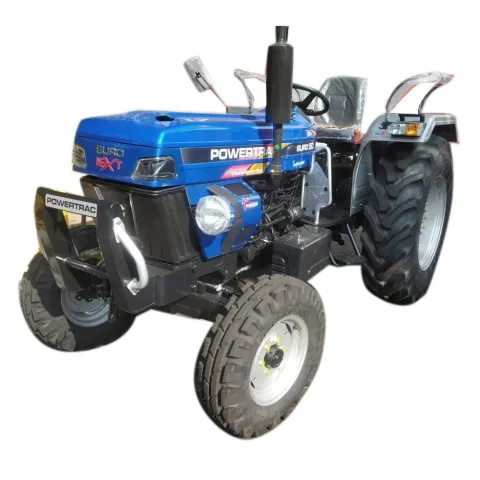
For a mainstream 3-10 acre wet holding, 41-50 HP with oil-immersed brakes and cage wheels is the sweet spot. The Swaraj 855 FE and Powertrac Euro 50 both bring useful weight and wet brakes. The Kubota MU4501 2WD at Rs 7.80-7.89 lakh is lighter and better mannered but you pay a clear premium over Indian rivals of the same output.
Below that, 31-40 HP is genuinely enough for small bunded plots, and lighter machines cause less structural damage to the field.
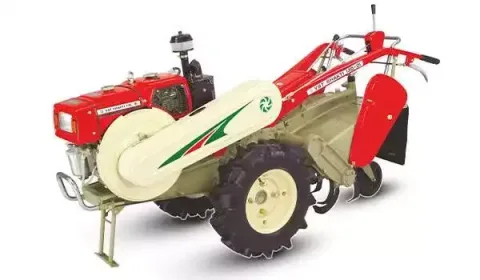
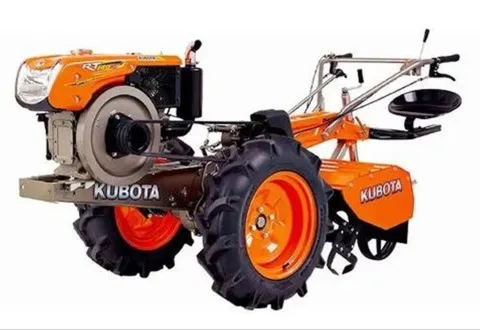
On very small or fragmented wet plots, a tractor may be the wrong tool entirely. A VST Shakti 130 DI power tiller at Rs 1.80-2.05 lakh or a Kubota PEM 140 DI at Rs 2.20-2.75 lakh puddles a small plot better than any tractor and gets into corners a tractor cannot reach. In West Bengal, Odisha and much of coastal Tamil Nadu this is the honest recommendation, not a consolation prize. See the full power tiller range.
If wheat follows your paddy, the second crop sets your horsepower
This catches out a lot of buyers in Punjab, Haryana, western UP and MP. Puddling itself needs very little power. Sowing wheat into paddy stubble needs a great deal of it. A Happy Seeder is rated by its maker for 50-60 HP and a Super Seeder for 65-75 HP, because both have to cut and handle standing residue while placing seed.
So if you intend to stop burning stubble and drill straight into it, your tractor decision is being made by the seeder, not by the puddler. That is one of the few genuinely good reasons to buy 51-60 HP for a paddy farm. It is also subsidised: residue-management machinery carries 50% assistance for individual farmers under the Crop Residue Management scheme in Punjab, Haryana, UP, MP and Delhi, and Custom Hiring Centres get 80%, including on tractors of 60 HP and above since the 2024 guidelines. Our subsidy guide sets out how that is claimed.
Should you buy 4WD for paddy?
Sometimes. Four-wheel drive genuinely helps getting out of a soft patch and pulling a loaded trolley off a wet field onto the road. It also adds cost, adds a front axle to service, and does nothing for you in a puddled field where the front wheels are mostly steering, not pulling. Read our 2WD vs 4WD comparison before paying that premium, and work out how much HP you actually need before you decide anything else.
One last thing worth saying plainly: we do not publish fuel consumption figures for puddling, because no one publishes a verified one. Consumption in slurry depends on wheel slip, ballast, implement and how deep you are working. Anyone quoting you a litres-per-hour number for puddling is guessing.