Tractor Subsidy Schemes in India 2026: What You Get
Aglist Editorial · Published 13 Aug 2026 · Last updated 23 Sep 2026
There is no PM Kisan Tractor Yojana. What does exist is SMAM, now delivered under PM-RKVY, plus the CRM scheme and state portals. Here is the real subsidy pattern, the eligibility, and why most applicants still get nothing.
Start with the thing nobody else will tell you. There is no PM Kisan Tractor Yojana. It does not exist as a central government scheme, it never has, and multiple fact-checkers have debunked it, including a widely shared claim of a Rs 5 lakh tractor subsidy that was confirmed as fake. Worse, the name is actively used as a phishing lure: fraudulent sites collect farmer details and application fees for a scheme that was never announced.
No genuine government subsidy portal charges a farmer an application fee. If someone asks you for money to apply, you are being robbed.
What does exist is worth knowing properly, because it is real money.
SMAM, and what it is called now
The Sub-Mission on Agricultural Mechanization is the main central route to a tractor subsidy. One thing has changed that almost no competitor page reflects. On 3 October 2024 the Union Cabinet rationalised the agriculture ministry's centrally sponsored schemes into two umbrellas, and Agricultural Mechanization is now a component of PM Rashtriya Krishi Vikas Yojana rather than a standalone mission. Total proposed outlay across the umbrella is Rs 1,01,321.61 crore, with a central share of Rs 69,088.98 crore.
Practically, the SMAM brand survives and agrimachinery.nic.in still runs the applications. What changed is that funding and reporting sit under PM-RKVY from 2025-26, and states now have more freedom to reallocate within the umbrella. So the honest answer to "what subsidy will I get" depends increasingly on your state's annual action plan.
The rates
The percentages have been stable and were reconfirmed by the Ministry as recently as July 2025:
- 40% of machine cost for general-category farmers
- 50% for SC and ST farmers, small and marginal farmers, women farmers, and farmers in the North-Eastern states
Both are subject to a per-machine ceiling. Those ceilings, by tractor category, run as follows in the SMAM operational guidelines:
- 2WD tractor, 8-20 PTO HP: 50% up to Rs 2.00 lakh / 40% up to Rs 1.60 lakh
- 4WD tractor, 8-20 PTO HP: 50% up to Rs 2.25 lakh / 40% up to Rs 1.80 lakh
- 2WD tractor, 20-40 PTO HP: 50% up to Rs 2.50 lakh / 40% up to Rs 2.00 lakh
- 4WD tractor, 20-40 PTO HP: 50% up to Rs 3.00 lakh / 40% up to Rs 2.40 lakh
- 2WD tractor, above 40 and up to 70 PTO HP: 50% up to Rs 4.25 lakh / 40% up to Rs 3.40 lakh
- 4WD tractor, above 40 and up to 70 PTO HP: 50% up to Rs 5.00 lakh / 40% up to Rs 4.00 lakh
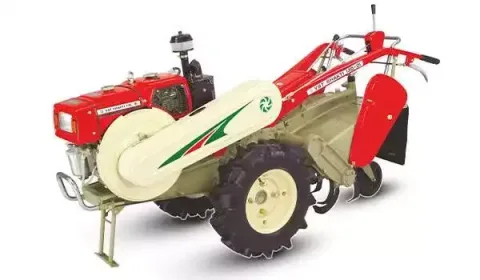
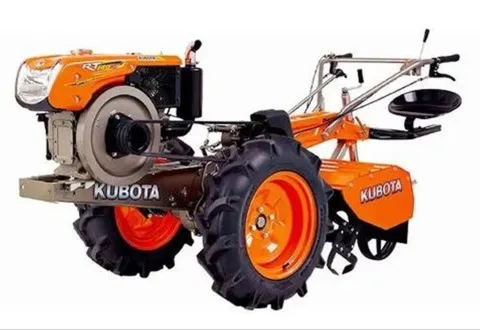
- Power tiller below 8 BHP: 50% up to Rs 0.65 lakh / 40% up to Rs 0.50 lakh
- Power tiller 8 BHP and above: 50% up to Rs 0.85 lakh / 40% up to Rs 0.70 lakh
Read the caveat before you plan around these numbers. This table comes from the operational guidelines as revised in 2018-19, which is the most detailed official version publicly retrievable. Revised guidelines were issued in 2024 and again in 2025 and the ceilings may have moved. The 40% and 50% percentages are solid; treat the rupee ceilings as indicative and confirm the current figure with your state agriculture department before you commit.
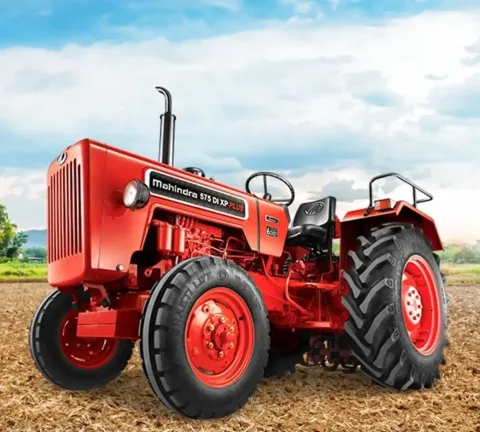
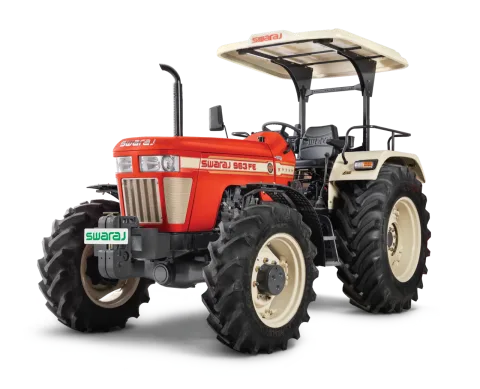
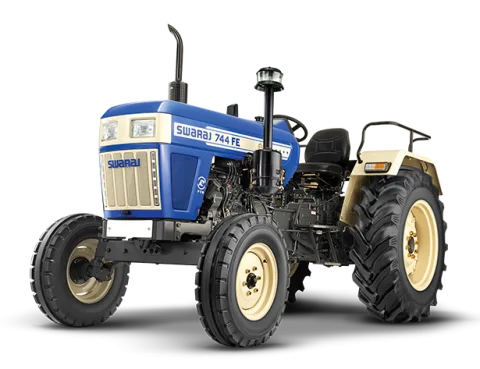
Note also that the bands are set by PTO HP, not engine HP, and the two are not the same number. A Mahindra 575 DI XP Plus is 47 engine HP but 42 PTO HP; a Swaraj 963 FE is 60 engine HP and 53.6 PTO HP. Our HP guide explains why that gap matters for more than subsidy paperwork.
The number you should not lead with
You will see "get up to Rs 5 lakh tractor subsidy" all over the internet. That figure applies only to a 4WD tractor above 40 and up to 70 PTO HP, for a reserved-category farmer, at 50%, and only if your application is selected. It is the top corner of the table, not the normal outcome.
For a mainstream 41-50 HP machine the realistic central ceiling for a general-category farmer sits in the region of Rs 2.00-2.40 lakh, and Rs 2.50-3.00 lakh for reserved categories.
The part that decides everything: allocation
Here is what the subsidy pages do not say. The binding constraint is not the percentage or the ceiling. It is the annual allocation. Demand exceeds the money available in almost every state, so selection is by lottery, applications run in seasonal windows, and a large share of applicants get nothing in a given year.
Plan your purchase as though you will not receive a subsidy, and treat it as a bonus if you do. Anyone who finances a tractor on the assumption that Rs 2 lakh is arriving has taken a risk they were not told about.
Crop Residue Management: the better-funded scheme
If you farm in Punjab, Haryana, Uttar Pradesh, Madhya Pradesh or Delhi, the CRM scheme is often the more useful door. Coverage was extended to Madhya Pradesh in the March 2024 revised guidelines.
- Individual farmers: 50% of machine cost, or the maximum permissible subsidy, whichever is lower
- Custom Hiring Centres, FPOs, cooperatives and panchayats: 80% on in-situ residue management implements, and 40% on other farm machinery
- 80% on tractors of 60 HP and above for CHCs, added in the 2024 guidelines. This is new and it matters: a CHC can now get both the residue machine and the tractor to pull it
Eligible machines include the Happy Seeder, Super Seeder, straw chopper and mulcher, Super Straw Management System, reversible MB plough, zero till drill, rotavator, balers and rakes. In June 2026 the Centre provisioned Rs 544.15 crore for 2026-27 stubble management, targeting over 46,000 machines.
One structural change catches people out. Since 2024, CRM assistance is credit-linked and back-ended. You take a loan and buy the machine; the government pays the subsidy to your lender after physical verification, not to you up front. It reduces your loan, it does not reduce your down payment. Our tractor loan and EMI guide explains what that does to your cash flow at delivery.
Custom Hiring Centres and Farm Machinery Banks
For anyone thinking about buying a tractor to hire it out, this is the route. 26,662 CHCs have been created under SMAM as of 2024-25. A CHC project runs from a minimum Rs 10 lakh to a maximum Rs 75 lakh in project cost, with in-situ residue machinery required to be at least 35% of the project under CRM. Under the Selected Villages component, a village-level farm machinery bank is eligible up to a Rs 10 lakh project cost with assistance at 80%.
SMAM has distributed 21.61 lakh machines to individual farmers between 2014-15 and 2025-26, so this is a functioning programme, not a paper one.
How to apply
1. Register at agrimachinery.nic.in as a Farmer, Society or Entrepreneur.
2. Complete your profile with accurate Aadhaar, land and bank details. A mismatch here is the most common reason applications fail.
3. Upload land records, category certificate if applicable, and bank details.
4. Submit within the application window your state announces. Selection is often by lottery.
5. On selection, buy from an empanelled or registered dealer, usually within a stated period.
6. Upload the invoice and delivery certificate. Payment follows physical verification, by DBT, typically 30 to 60 days after verification.
A minimum 30% of allocation is earmarked for women farmers. You must not already have received a similar subsidy under another central scheme.
State schemes and portals
Madhya Pradesh runs e-Krishi Yantra Anudan at dbt.mpdage.org, with reported rates of 40% up to Rs 1.5 lakh for general farmers and 50% up to Rs 2 lakh for SC, ST, women and small and marginal farmers, selection by lottery, and a rule against claiming for the same equipment category within five years. Those figures come from a scheme aggregator rather than the department itself, so verify on the portal.
Punjab: agrimachinerypb.com, which handles the CRM machinery applications. The 2026 window closed on 24 April 2026.
Haryana: agriharyana.gov.in and the state CRM portal, with farmer registration through Meri Fasal Mera Byora. The CRM percentages are verified; the widely quoted "50% Haryana tractor subsidy" is not.
Gujarat: ikhedut.gujarat.gov.in is the correct single-window channel. The 25-50% tractor figures circulating online are not verified against the Gujarat agriculture department.
Maharashtra: mahadbt.maharashtra.gov.in. Rajasthan: rajkisan.rajasthan.gov.in. Uttar Pradesh: the state agriculture department farmer portal, and UP is a CRM state so the 50% and 80% residue machinery rates apply there.
For Bihar, Karnataka, Andhra Pradesh, Telangana, West Bengal, Tamil Nadu, Odisha, Chhattisgarh and Jharkhand, each runs SMAM through its own department portal with state top-ups that vary year to year. We have not verified rates for those nine states and will not publish figures for them until we have.
Two claims to ignore. NABARD does not pay a 30% tractor subsidy; it refinances banks that lend for mechanisation. And no portal, central or state, charges an application fee.
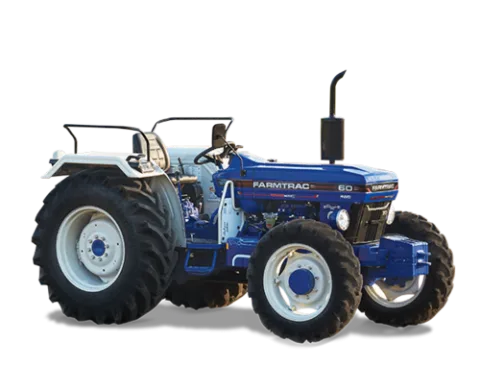
Before you apply, work out what the machine actually costs on the road in your state with our RTO and registration guide, and if you are looking at the 51-60 HP band for CHC work, check the Farmtrac 60 Powermaxx 4WD and the power tiller range for the smaller end of the subsidy table.