How to Improve Tractor Mileage: What Actually Works
Aglist Editorial · Published 17 Aug 2026 · Last updated 23 Sep 2026
Nobody can honestly publish litres per hour for a tractor model. Here is what really decides your diesel bill — implement matching, ballast, tyre pressure, PTO speed, gear choice and engine load — and what to fix this week.
Every tractor portal in India publishes mileage figures. We do not, and this guide explains why, then gives you the things that genuinely move your diesel bill.
Why there is no mileage number on our pages
A car's mileage is a number because a car does one job: it moves itself along a road. A tractor's diesel consumption depends on what it is dragging, how deep, in what soil, at what speed, on what tyres, at what engine load.
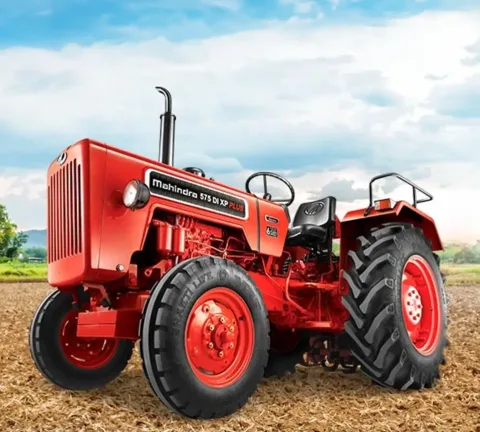
The same Mahindra 575 DI puddling a paddy field in cage wheels, hauling nine tonnes on a metalled road, and idling at a thresher belt for six hours is three completely different machines from a fuel point of view. No manufacturer publishes a litres-per-hour figure for Indian field conditions, and no portal that prints "12 litres per acre" got it from anywhere you would trust.
So we publish specifications and we say plainly when we do not have a figure. If you want an honest estimate for your own farm, note your hour meter and your tank fill over a real week of your own work. That number is worth more than anything printed on a website.
The one fuel number some makers do publish
There is a real efficiency figure on a few spec sheets, and almost nobody explains it. It is specific fuel consumption, written as g/kWh — grams of diesel burned to produce one kilowatt-hour of work at the PTO, measured on a test bed.
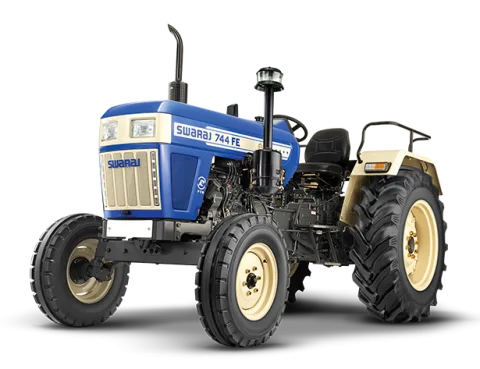
- Swaraj 744 FE: 257 g/kWh
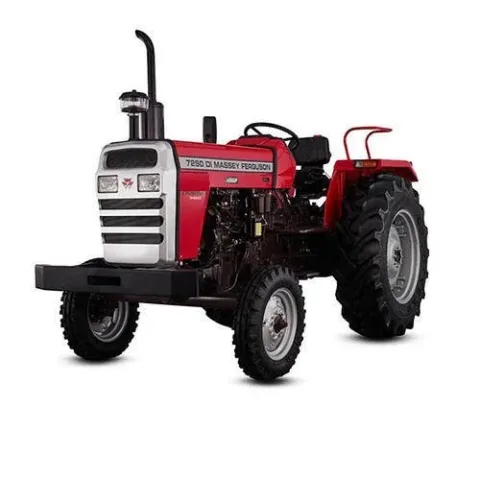
- Massey Ferguson 7250 DI: 265 g/kWh
- Swaraj 724 XM: 272 g/kWh
Lower is better. What it tells you is how efficiently the engine converts diesel into useful work at its rated point. What it does not tell you is how many litres you will burn on your land, because it says nothing about the implement, the soil or the driver. Treat it as a comparison tool between engines, not as a promise.
Where the diesel actually goes
Implement matching, which is the biggest single factor
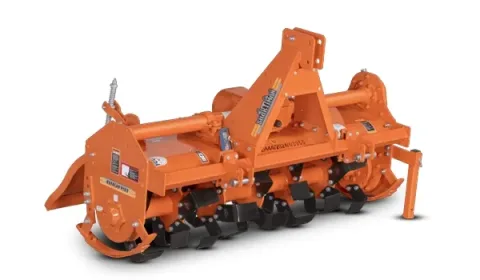
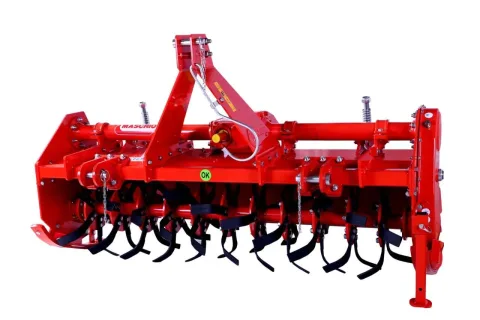
An engine burns fuel in proportion to the load it is carrying. Put a 6 ft rotavator rated for 50-65 HP behind a 42 HP tractor and the engine works at or beyond its limit all day, drops revs in every heavy patch, and burns fuel to recover. The Shaktiman Regular Plus 6 ft rotavator is specified for 50-65 HP for exactly this reason, and the Maschio Gaspardo Virat Plus 165 at 5 ft is specified for 40-45 HP.
Undersizing wastes fuel too, in a different way. A 55 HP tractor pulling a 9-tyne cultivator meant for 40-45 HP runs at part load, where diesel engines are less efficient, and you do more passes than you needed. Our implement matching guide covers the arithmetic.
Depth, and the habit of ploughing deeper than the crop needs
Draft rises steeply with depth. A rotavator set 200 mm deep is asking for far more power than the same machine at 140 mm, and for most seedbed work the deeper setting buys nothing agronomically. Set depth for the crop, not for the look of the field.
Gear up and throttle down
This is the oldest fuel-saving practice in tractor operation and it still works. On a light job — a light cultivator pass, a sprayer, a seed drill, an empty trolley — select a higher gear and reduce the throttle to hold the same ground speed. The engine does the same work at lower revs, with less friction and less fuel burned per hour.
The limit is honest: do not do this on a heavy draft job or with a PTO implement that needs rated speed. Lugging an engine at low revs under heavy load is worse than the problem you are solving.
PTO speed and the 540E option
PTO work is where fuel goes fastest, because the engine is at or near rated speed for hours. Several tractors on this site give you a way out that owners rarely use.
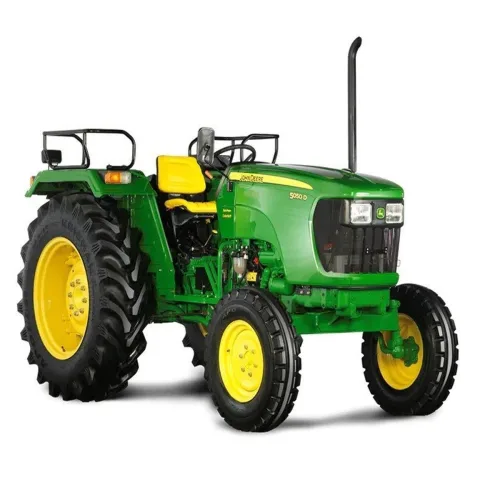
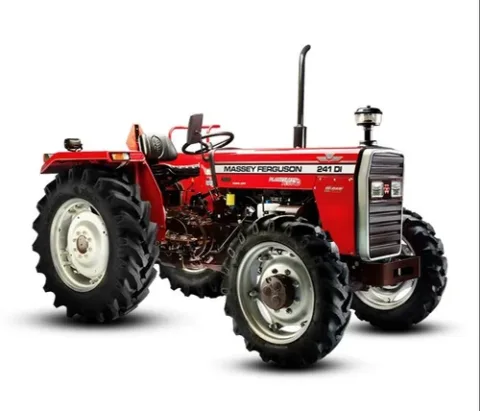
The John Deere 5050 D delivers 540 PTO rpm at either 1600 or 2100 engine rpm. Same PTO speed for the implement, four hundred fewer engine revolutions a minute. On a light PTO job the economy setting is free money. The Massey Ferguson 241 DI Maha Shakti attacks the same problem from the design side with a low 1500 rated rpm and PTO 540 at 1500 ERPM.
Use the economy mode when the implement is light — a sprayer, a light rotavator in worked soil. Use full rated speed when the implement genuinely needs the power, such as a thresher or a heavy rotavator in first-pass ground.
Tyre pressure and wheel slip
Tyres are the cheapest fix on this list and the most ignored. Field pressure is lower than road pressure. A rear tyre run hard in a tilled field has a small footprint, slips more, and every slipping revolution is diesel turned into churned soil.
You can see this yourself. Mark the rear tyre with chalk, count wheel turns over a measured distance with the implement in work, then repeat with it lifted out. A large difference means the wheels are turning without the tractor advancing, and that difference is your fuel bill.
Ballasting is the other half. Too little weight and heavy tyres spin; too much and you are dragging dead iron all season and compacting your own soil. Ballast for the heaviest job of the season and take it off afterwards. The Kubota NeoStar B2741S tackles slip electronically with its Super Draft Control, but on most tractors it is your hands and your judgement.
Air filter and engine load
A choked air filter starves the engine of air, which means incomplete combustion and more diesel for the same output. In dusty rotavator or thresher work, the pre-cleaner bowl can fill in a day. Full detail is in our service and maintenance guide, and the short version is: clean it far more often than the manual's minimum during dry season work.
Idling is the silent one. A tractor standing at a thresher, at a mandi gate or at a tubewell with the engine running is burning diesel and producing nothing. If the wait is more than a couple of minutes, switch it off.
The one place a real litres-per-acre number exists
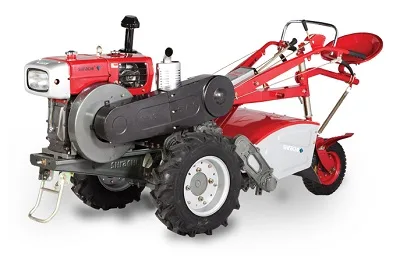
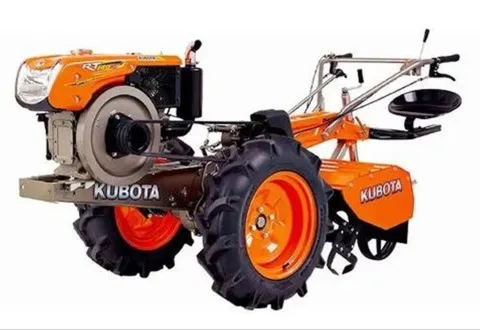
Power tillers sometimes publish both output and fuel use, which lets you check the arithmetic yourself. The Shrachi SF-15 DI is listed at 0.4-0.5 acre per hour with a fuel use of 1.2-1.5 litres per hour. Divide one by the other and you get somewhere around 2.5 to 3.5 litres an acre for wet tillage. The Kubota PEM-140 DI publishes 252 g/kW-h, which is a lower specific consumption than any tractor engine listed above.
That is not an argument for buying a tiller instead of a tractor — it covers a fraction of the ground per hour. It is an argument for treating any per-acre figure with suspicion unless the source publishes both halves of the sum.
What you can change this week
1. Set tyre pressures for the work you are actually doing, front and rear.
2. Clean or replace the air filter, and empty the pre-cleaner bowl.
3. Pick the right gear-and-throttle combination for the light jobs instead of running everything at full revs.
4. Use the 540E or economy PTO setting on light PTO work if your tractor has one.
5. Stop idling at the thresher, the tubewell and the mandi.
6. Match implement width to your tractor's HP, or cut your working depth to what the crop needs.
7. Note your hour meter at every tank fill, so you have your own consumption figure by the end of the season.
What will not help
Fuel additives sold in the market with no test data behind them. Removing or drilling the air filter housing to "let the engine breathe", which lets dust straight into the cylinders. Running an oversized implement in a lower gear to make it work — the engine load does not care what gear you chose. And chasing a mileage figure from a website instead of measuring your own tractor for one week.