Tractor Service Schedule and Maintenance Guide India
Aglist Editorial · Published 16 Aug 2026 · Last updated 23 Sep 2026
Service intervals run on hours, not months. What to check before and after kharif and rabi, how to look after an air filter in real dust, when hydraulic and gearbox oil matter, and what skipping it costs.
Start with the one thing this guide cannot do for you: it cannot tell you your service interval. That number lives in the operator's manual that came with your tractor, and it is different from model to model. Anyone publishing a single "change engine oil every 250 hours" line for all Indian tractors is guessing. What we can do is show you how the schedule is structured, what actually goes wrong in Indian field conditions, and where owners lose money.
Your interval is printed on the machine you bought
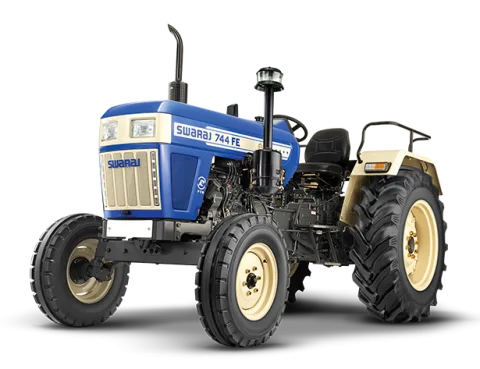
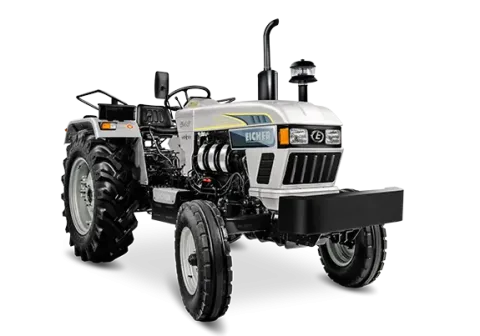
Two examples from our own catalogue, both from spec sheets rather than from anybody's opinion. The Swaraj 744 FE is sold with a 6-year warranty built around a 400-hour service interval. The Eicher 548 is sold with a 6-year warranty built around a 200-hour interval. Same warranty length, twice the number of workshop visits over the life of the machine. That difference is a real ownership cost and almost nobody compares it before buying.
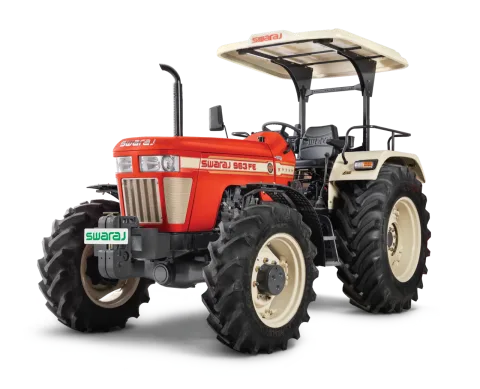
The Swaraj 963 FE, a 60 HP machine, also runs a 400-hour interval. Longer intervals are not a sign of a better tractor and shorter ones are not a sign of a worse one — they reflect oil specification, filtration and how the maker has set its risk. Read the number, budget for it.
Hours, not months
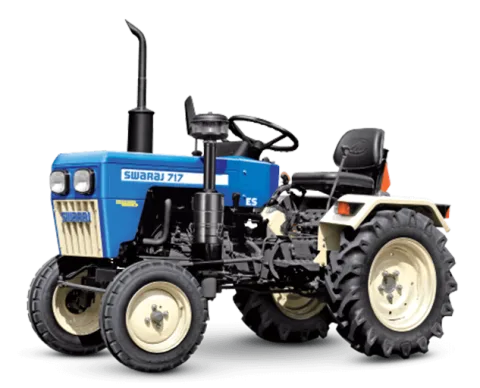
Every warranty on this site is capped two ways. Six years or 6,000 hours. Five years or 5,000 hours. Two years or 2,000 hours. The Swaraj 717 is 1 year or 750 hours, which tells you exactly how much annual running its maker expects from a 15 HP orchard machine.
So the first piece of maintenance discipline is boring: read the hour meter and write the reading down. A farmer who services on Diwali every year is servicing on the wrong signal. A tractor doing 300 hours a year and one doing 1,200 hours a year on a custom-hiring round need completely different schedules from the same manual.
Daily and weekly, before you start
The checks that prevent the expensive failures take four minutes.
- Engine oil on the dipstick, on level ground, before starting cold.
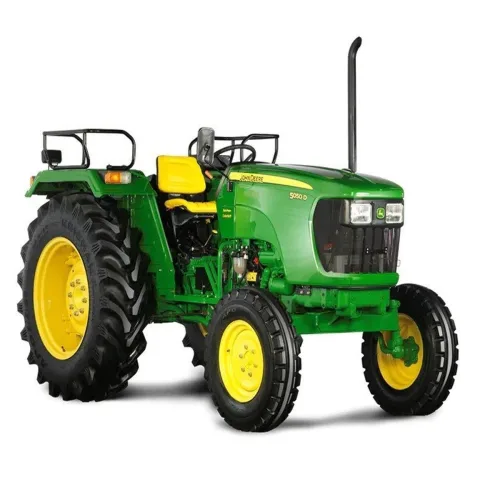
- Coolant level in the radiator or overflow bottle. The John Deere 5050 D uses a coolant overflow reservoir, which makes this a glance rather than a job.
- Air pre-cleaner bowl. In dry rotavator work this fills faster than you think.
- A look under the tractor for fresh oil on the ground. A drip today is a seal; the same drip ignored for a month is a pump.
- Tyre pressure once a week, not once a season. Wrong pressure costs fuel and eats tyres, and it is free to fix.
Air filters: the thing that actually kills engines here
Dust is the difference between a tractor's rated life on paper and its life in Rajasthan. There are two filter types on Indian tractors and they are looked after in opposite ways, which is where owners go wrong.
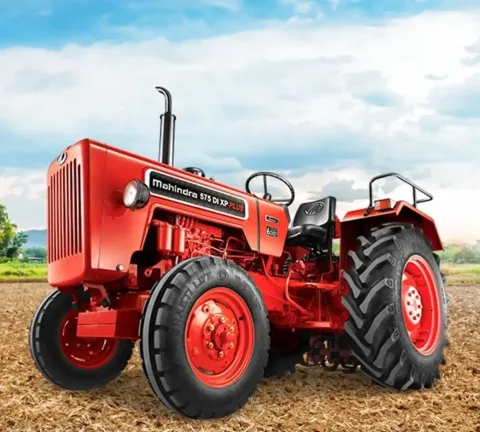
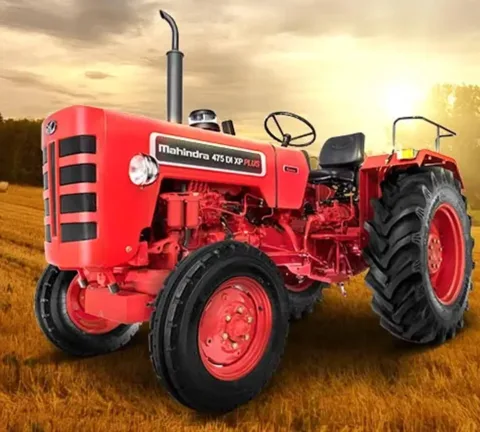
Oil bath filters — the Mahindra 575 DI XP Plus and 475 DI XP Plus both use a 3-stage oil bath with a pre-cleaner. The oil in the bowl is the filter medium. It must be emptied of mud, washed, and refilled with clean oil to the marked level. Not above it. Overfilled oil bath filters push oil into the intake and the engine draws it in.
Dry element filters — the Mahindra Yuvo Tech Plus 575 and Swaraj 963 FE use dry type filters, and the John Deere 5050 D uses a dual-element dry filter. These are cleaned by tapping the element and blowing compressed air from the inside outward, never from outside in, and never washed in diesel or water. A washed paper element looks clean and filters nothing.
In a dusty rotavator or thresher season, checking daily is not excessive. A clogged filter starves the engine, and a starved engine burns extra diesel to do the same work — which is why our tractor mileage guide puts the air filter near the top of the list.
Fuel, and why newer tractors are less forgiving
Older mechanical injection engines will tolerate poor diesel for a while. Common rail engines will not. The Sonalika Tiger DI 55 CRDS and the John Deere 5310 both use high-pressure common rail systems, and their injectors work to tolerances that dirty or watered fuel destroys quickly. Filter your diesel. If your tractor has a water separator in the fuel line, as the Swaraj 724 XM does, drain it — it is there for a reason and most owners never touch it.
Buy diesel from a pump, not from a drum in a shed. Let a filled barrel stand before drawing from it, and never draw the last few inches.
Hydraulic and gearbox oil
On most Indian tractors the hydraulic system, the transmission and the rear axle share one oil sump. That single fill is doing three jobs: lubricating gears, transferring hydraulic pressure to lift your implement, and in oil-immersed brake systems, taking the heat off the brakes.
What that means in practice:
- Low oil shows up first as a lift that will not hold a heavy implement at the headland. If your 1,500 kg lift suddenly feels weak with the same rotavator, check the level before you blame the pump.
- Trolley haulage on oil-immersed brakes puts heat into the same oil. Heavy haulage seasons age it faster than field work does.
- Water is the enemy. Puddling for paddy pushes water at seals all day. If the oil on the dipstick looks like tea with milk, it has water in it and it needs changing regardless of hours.
- Use the grade the manual specifies. Hydraulic oil and gear oil are not interchangeable just because both are thick and both are oil.
Around the kharif season
Before: hydraulic oil level and seal condition, because puddling and wet-field work is the hardest thing your rear end does all year. Brakes checked properly — a tractor on a bund with weak brakes is how people get hurt. Battery terminals cleaned before the monsoon, not after. Tyre pressure set for field work, which is lower than road pressure.
After: wash the underside properly. Paddy mud dries into a jacket that holds moisture against the axle housings and the linkage arms for months. Grease every point on the three-point linkage and the top link. Look at the PTO shaft and its guard.
Around the rabi season
Before: rabi is dust and long dry hours behind a rotavator or a seed drill. Air filter first, then fuel filters, then the radiator core — blow the chaff out of the fins from the fan side. An engine running hot in a wheat field is usually a blocked radiator, not a bad thermostat.
After: threshing season is the hardest life a PTO ever has. Check the PTO shaft splines and the clutch, and inspect the belt if you drive a thresher off a pulley. Grease the linkage again.
Storage between seasons
A tractor standing idle for three monsoon months is not resting.
- Park under cover on hard ground, not on soft mud where the tyres sink and the sidewalls take a set.
- Fill the fuel tank. An empty tank sweats inside and rusts.
- Disconnect the battery, or run the tractor once a fortnight for long enough to charge it properly.
- Grease the linkage and hydraulic ram before it sits, not after.
- Lower the implement to the ground or take it off. Leaving a heavy rotavator hanging on the lift for three months loads the ram and the seals for no reason.
What neglect actually costs
We will not invent a repair bill. What we can say is that the cheap items in this guide are cheap and the failures they prevent are not. An air filter element costs a fraction of a piston set. A grease gun costs a fraction of a linkage pin. Draining a water separator costs nothing and a common rail injector set does not.
There is one piece of genuinely good news on cost. Under the September 2025 GST reform, tractor parts moved from 18% to 5% and tyres and tubes from 18% to 5%, saving roughly ₹3,000-6,000 on a pair of tyres. The reform is expected to cut lifetime maintenance costs by roughly 13-15%. Servicing your tractor properly got cheaper. Not servicing it did not.
The last thing worth saying: a 6-year, 6,000-hour warranty is a conditional promise, and the condition is the schedule in your manual. If a major claim comes and you have no record of the services, you are arguing from a weak position. Keep the book. Get it stamped.