How to Choose Implements for Your Tractor: A Real Guide
Aglist Editorial · Published 19 Aug 2026 · Last updated 23 Sep 2026
Width against HP, CAT-I versus CAT-II linkage, what lift capacity really means at the end of a rotavator, and PTO speed. Four checks that stop you buying an implement your tractor cannot pull.
The most expensive implement mistake in India is not buying a bad machine. It is buying a good machine that your tractor cannot properly run. This guide is four checks, in the order you should make them.
First, know which kind of implement you are buying
Draft implements are pulled. A cultivator, an MB plough, a disc harrow, a trolley. The number that limits you is engine power at the drawbar, plus tractor weight, because a light tractor spins its wheels before its engine runs out of breath.
PTO implements are driven. A rotavator, a thresher, a baler, a super seeder, a post hole digger. The number that limits you is PTO horsepower, and that is not the same as engine HP.
Get this wrong and every later calculation is wrong.
PTO HP is the number a rotavator actually sees
Engine HP is measured at the flywheel. By the time power reaches the PTO shaft it has passed through the clutch and the PTO gear train, and some of it is gone. How much varies a great deal between models.
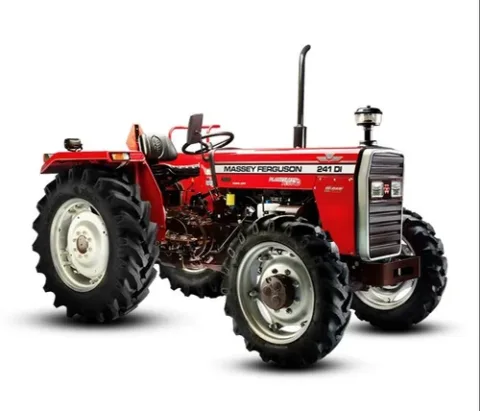
- Massey Ferguson 241 DI Maha Shakti: 42 engine HP, 35.7 PTO HP
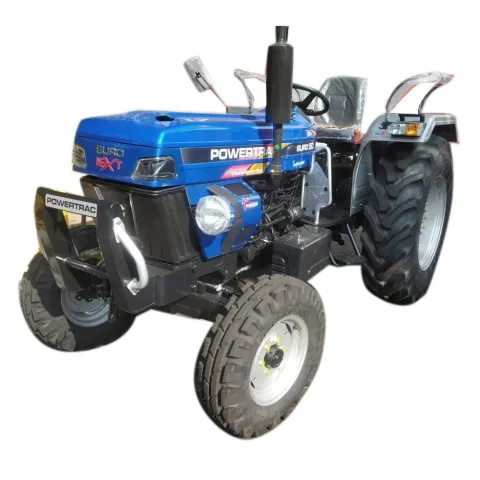
- Powertrac Euro 50: 50 engine HP, 45.6 PTO HP
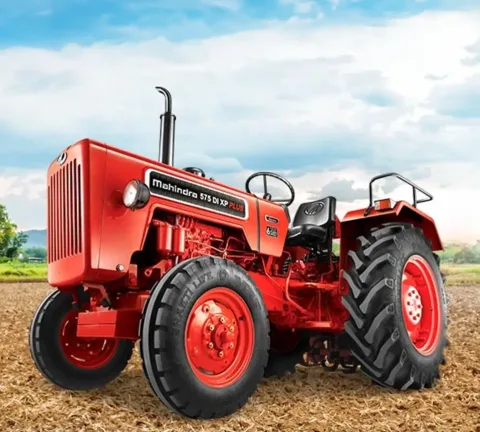
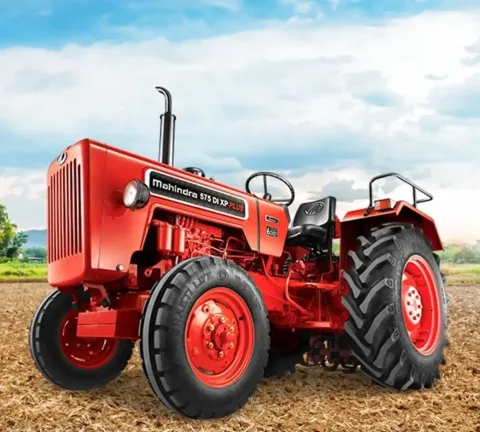
- Mahindra 575 DI: 45 engine HP, 41.8 PTO HP
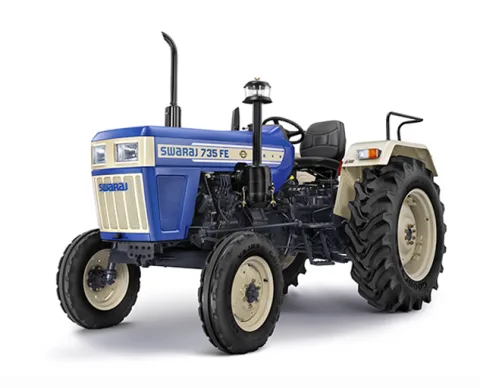
- Swaraj 735 FE: 40 engine HP, 32.6 PTO HP
That is a spread from roughly 82% to 91% of engine power reaching the shaft. So a "42 HP tractor" and another "42 HP tractor" can be six or seven horsepower apart where it matters for a rotavator. When an implement maker prints "45-50 HP", read it as a demand on the PTO, and check the PTO figure on your own tractor page before you buy.
Width versus HP, and the classic mistake
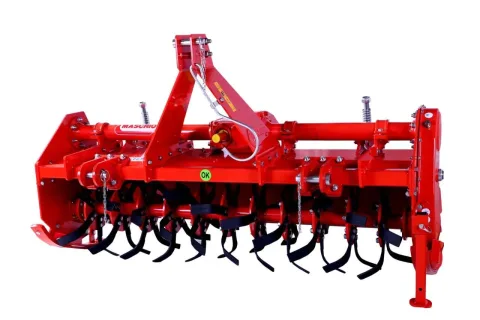
The single most common error we see is a 6 ft rotavator bought for a 40 HP tractor because the price was good and the neighbour had one.
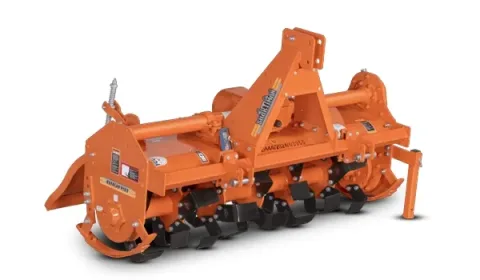
Look at what 6 ft actually asks for. The Fieldking FKRTSG-175 at 1,750 mm is rated 45-50 HP. The Shaktiman Regular Plus at 1,881 mm is rated 50-65 HP. A 40 HP tractor delivering 32-34 PTO HP is not at the bottom of that range, it is below it.
What happens next is predictable. The engine bogs in every heavy patch. You compensate by working shallower, so you lose the seedbed quality you paid for. Fuel use goes up because the engine spends its day recovering revs. The clutch and PTO train take a load they were not designed for. And your ground speed drops so far that the wider machine covers no more ground per hour than a properly matched 5 ft unit would have.
The Maschio Gaspardo Virat Plus 165 at 5 ft and 40-45 HP is the honest answer for a 40 HP tractor. It costs about the same as the 6 ft units and it will actually work.
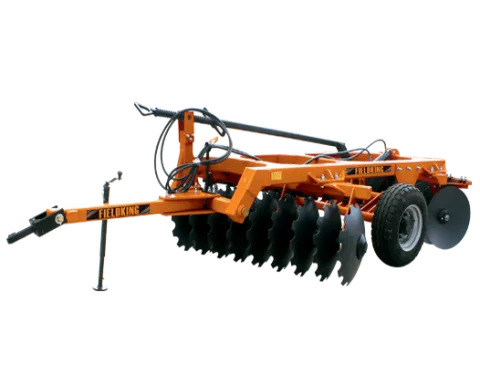
The same logic runs across every category. The Fieldking 7 ft disc harrow wants 60-70 HP. The Shaktiman Super Seeder 8 wants 65-75 HP. The 10 ft laser land leveller wants 90-105 HP, which is more tractor than 98% of Indian buyers own — hire that operation.
Linkage category: CAT-I or CAT-II
The three-point linkage comes in standard categories. CAT-I uses thinner lower-link pins and narrower ball spacing; CAT-II uses noticeably thicker pins set further apart, because it is designed to carry heavier implements.
Read your tractor page carefully, because makers state this differently:
- The Mahindra 575 DI XP Plus has a CAT-2 high precision 3-point linkage.
- The Swaraj 735 FE takes CAT-I and CAT-II implement pins, which is genuinely useful if you borrow implements around the village.
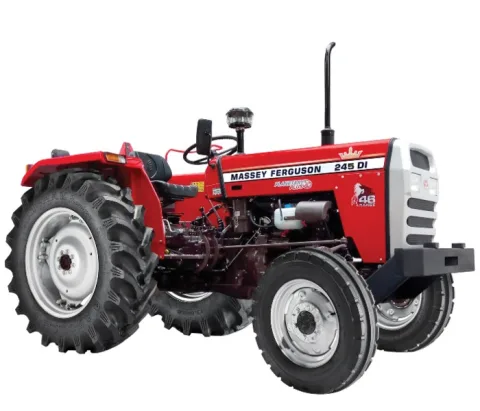
- The Massey Ferguson 245 DI is supplied with CAT-1 and CAT-2 balls.
- Compact machines are usually CAT-I only.
Two practical rules. A CAT-II tractor can usually take a CAT-I implement using bushes, so the linkage is not the constraint in that direction. A CAT-I tractor cannot safely carry a CAT-II implement by drilling out the holes — the pin is thicker because the load is heavier, and enlarging a CAT-I ball end is how linkage arms crack.
Both the Shaktiman rotavator and the Maschio Virat Plus 165 are supplied with CAT-II linkage. Check yours before you pay.
Lift capacity, and why the brochure number flatters you
Lift capacity is quoted at the lower link ends. The centre of gravity of a mounted implement sits well behind those ends — a rotavator hangs almost a metre back — and the further back the weight, the less the hydraulics can actually raise. Treat the quoted figure as a ceiling you will never touch, not a working allowance.
Now put real weights against it:
- Maschio Virat Plus 165 rotavator: 415 kg
- Fieldking FKRTSG-175 rotavator: 440 kg
- Shaktiman Regular Plus rotavator: 447 kg
- Fieldking 2-bottom MB plough: 212 kg
- Fieldking 7 ft offset disc harrow: 960 kg
- Fieldking FKTMS-550 boom sprayer: 136 kg empty, plus 550 litres of spray, which is over half a tonne of liquid on its own
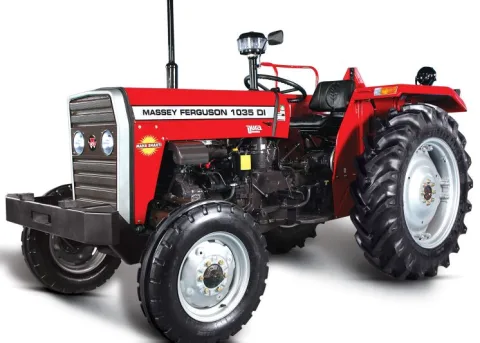
Against those numbers, a Massey Ferguson 1035 DI at 1,100 kg lift is fine for a light rotavator and a plough, and out of its depth with a full 550 litre sprayer. A Mahindra 575 DI at 2,000 kg has real headroom. A 960 kg disc harrow needs both lift capacity and rear weight, which is why its 60-70 HP rating is about the tractor as much as the engine.
Watch the front end too. Hang 450 kg a metre behind the rear axle and the front wheels get light, especially on a road or a slope. That is what front weights are for.
PTO speed, and the trap on small tractors
Most Indian implements are built for 540 rpm at the PTO. Many tractors also offer 540E, an economy setting that reaches 540 shaft rpm at lower engine revs, and heavier machines offer a 1000 rpm output on a different shaft profile. The Swaraj 855 FE gives 540 and 1000. Some tractors add a reverse PTO for implements that must run while the tractor backs up.
The trap sits at the small end. The Mahindra JIVO 245 DI 4WD runs a multi-speed PTO at 605 and 750 rpm — not 540. That is deliberate, and it suits the narrow orchard implements the JIVO is sold with, but it means a standard 540 rpm implement will not run at its designed speed. Match the implement to the PTO your tractor actually has, not to what you assume every tractor has.
Implements that do not hang on the linkage at all
Some machines are trailed or ground-standing, and lift capacity is irrelevant to them. The Mahindra M55 thresher weighs 1,250 kg and stands on the ground; what it needs is 35-55 HP of steady PTO power for hours. The 5-tonne hydraulic tipping trolley is rated for 50-70 HP tractors, and there the constraints are drawbar pull, brakes and tractor weight on a gradient, not the three-point hitch.
A sensible buying order
1. A trolley, if you do not already have one. It is the most-owned implement on Indian farms and the main off-season earner for a tractor.
2. A cultivator. Cheap, fits almost anything, works every season.
3. A rotavator, sized to your PTO HP rather than your ambitions.
4. An MB plough or disc harrow, if your soil needs real primary tillage.
5. Everything else when the crop justifies it.
Before you pay
Check the implement's rated HP against your tractor's PTO HP, not its engine HP. Check the linkage category on both sides. Check the implement's weight against your lift, and remember the brochure number is measured at the links. Check the PTO speed matches. And apply for subsidy before you buy, not after — SMAM pays 40% for general farmers and 50% for SC/ST, small, marginal and women farmers, through agrimachinery.nic.in, and the money arrives by DBT after physical verification of a machine bought from a registered dealer. Buy first from an unregistered shop and the subsidy is simply gone.
If you are still choosing between the two implements most farmers argue about, read rotavator versus cultivator. If you are still choosing the tractor itself, our 41-50 HP comparison is the band most of these implements are designed around.